Complete a via ferrata route
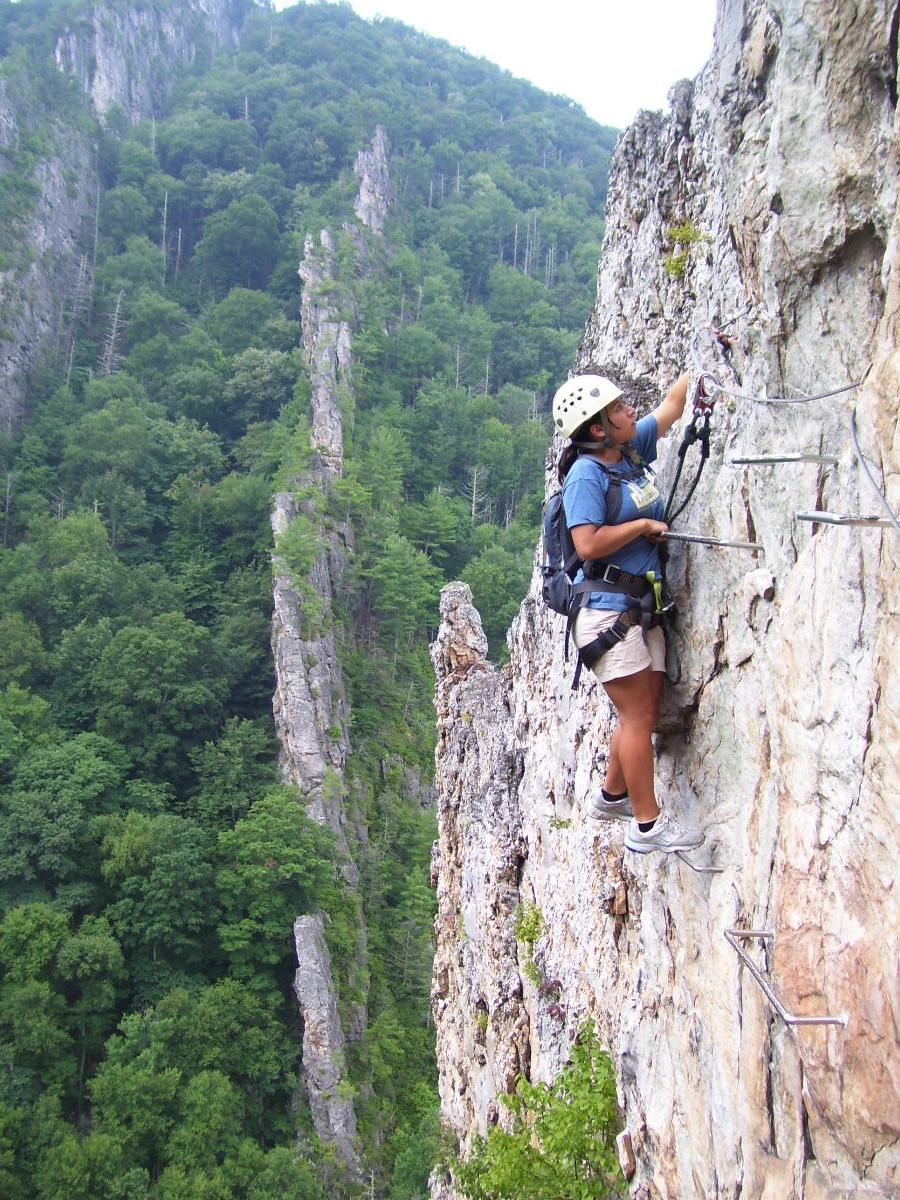
Via ferrata are mountain routes equipped with fixed steel cables, rungs and ladders that let walkers and climbers move through steep or exposed rock while remaining continuously attached to a safety system. The experience can be short and introductory on low-exposure walls or long and committing on high alpine ridges; route choice determines technical difficulty and time on the line. Plan the day around a clear route grade and an honest assessment of balance, head for heights and comfort with exposure. Required personal protective equipment is a climbing helmet, a certified climbing harness and a two‑leg via‑ferrata lanyard with an energy absorber; hire kits and guided services are widely available for beginners. Expect briefing and practice on a short section before committing to the full route. Typical sessions vary: easy local ferratas can be finished in 1–3 hours including approach, while longer alpine ferratas commonly take 4–8 hours or a full day and occasionally longer when linked with alpine approaches or descents. Weather, fitness and route length materially affect time and difficulty, so plan conservatively and include turnaround criteria. Practical considerations include wearing sturdy approach or mountaineering shoes (good grip), light gloves to protect hands from cables, and layered clothing for mountain weather. If you lack the required kit or experience, book a guided trip or a hire‑and‑brief package; guides also advise on route grading, safety briefings and emergency plans.