Eat Ethiopian Food With My Hands
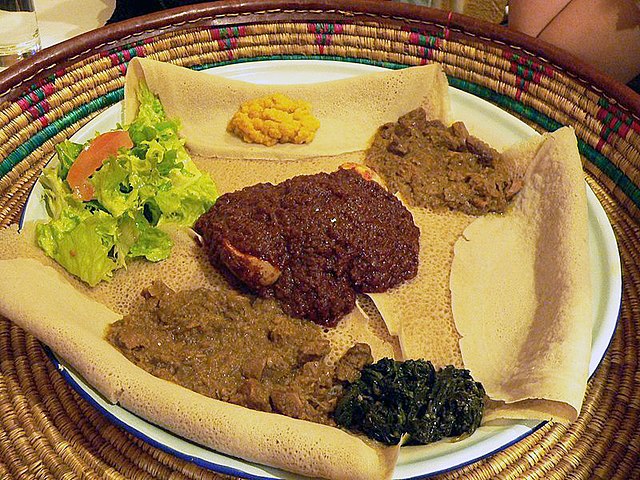
An Ethiopian meal often arrives on a broad round of injera, the tangy, soft flatbread that serves as plate, accompaniment and utensil. Stews, lentils, vegetables and salads are arranged across it for everyone to share. Tearing a small piece and using it to gather a bite makes texture and conversation part of the meal rather than an obstacle between diner and food. Choose an Ethiopian restaurant known for a varied platter and ask the staff to recommend a balance of dishes. Wash and dry your hands first, then use the right hand unless your host advises otherwise. Tear a modest piece of injera without dragging your fingers through shared food, pinch up one portion and eat it in a single bite. A gursha—offering someone else a bite—can express warmth, but it is optional and should never be imposed on a stranger. Tell the restaurant about allergies and dietary needs before sharing begins. Injera may be pure teff or blended with wheat or barley, while dishes can contain milk, egg, sesame, nuts or clarified butter. Communal eating does not remove ordinary hygiene: do not lick fingers and return them to the platter, share when unwell or reach across others repeatedly. Pace chilli, check meat dishes are appropriate for you and accept a separate plate if disability, infection risk or personal comfort makes shared hand-eating unsuitable. Notice how injera’s acidity balances berbere, slow-cooked pulses and rich sauces, and how the bread changes as it absorbs them. The experience is complete when the method helps you understand the meal’s structure and hospitality—not when etiquette becomes a performance judged from outside the culture.