Flyboarding
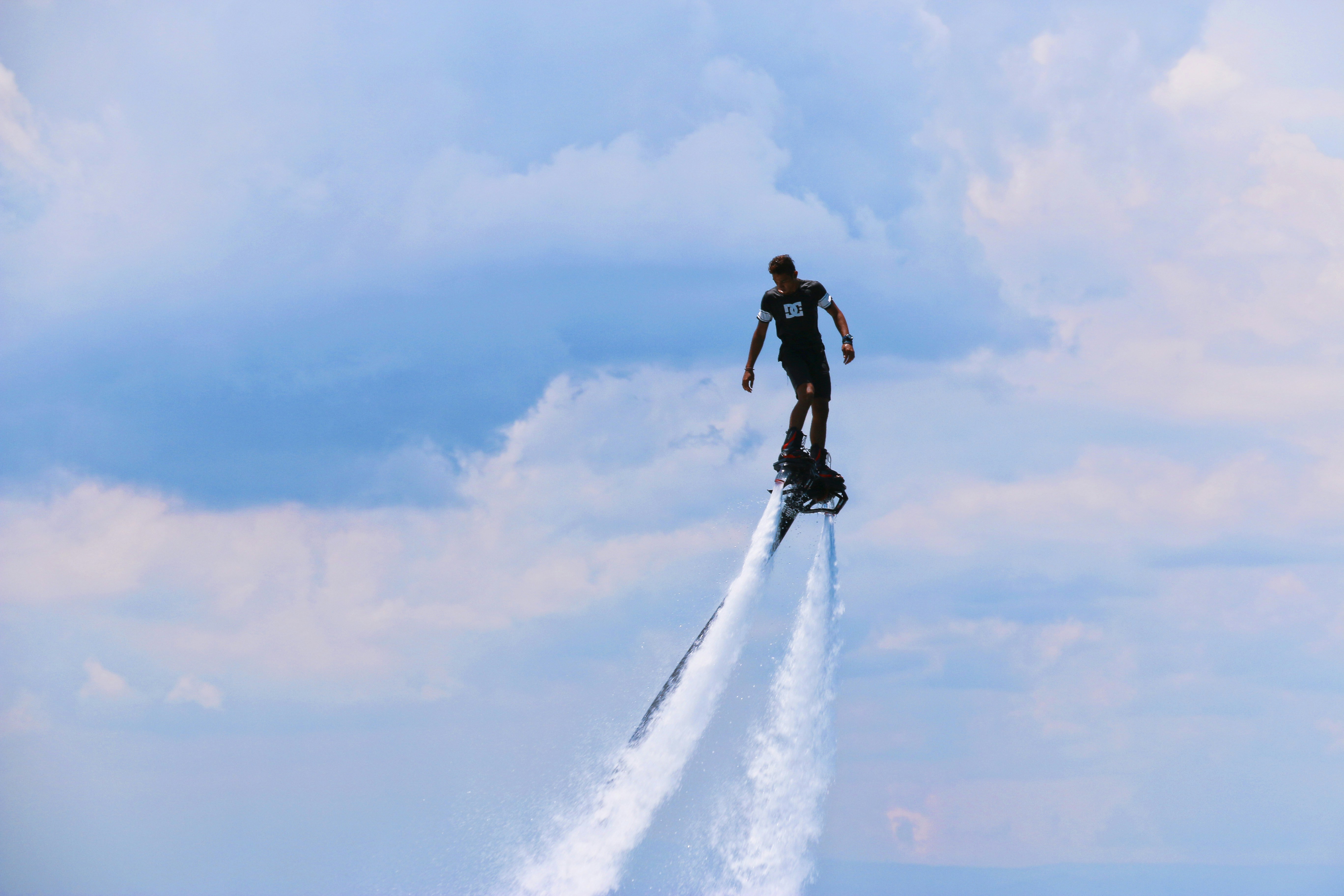
Point your toes down, let the water jets lift and discover how difficult it is to look graceful while rising above a lake on two columns of water. Flyboarding connects a board beneath your feet to a personal watercraft through a long hose. Tilt forward to move, correct with your ankles and expect the first few attempts to end with an enthusiastic splash. Most beginners spend their session learning balance rather than attempting the flips seen in show reels. The nozzles beneath the feet provide most of the thrust, while the watercraft supplies the power and an instructor controls or supervises the session. Once the board steadies beneath you, even hovering a metre or two above the surface feels wonderfully improbable. It combines the reactions of board sports with the unfamiliar sensation of being pushed upwards by water. Book with a specialist operator on a suitable lake or sheltered stretch of sea. You need to be a capable swimmer and must follow the instructor's briefing; a buoyancy aid, helmet and protective clothing are essential, and providers may set their own age or fitness rules. Wind, waves and poor visibility can cancel a session. Add this to your list if falling in repeatedly sounds like a fair price for eventually flying.