Give Up Your Seat to Someone
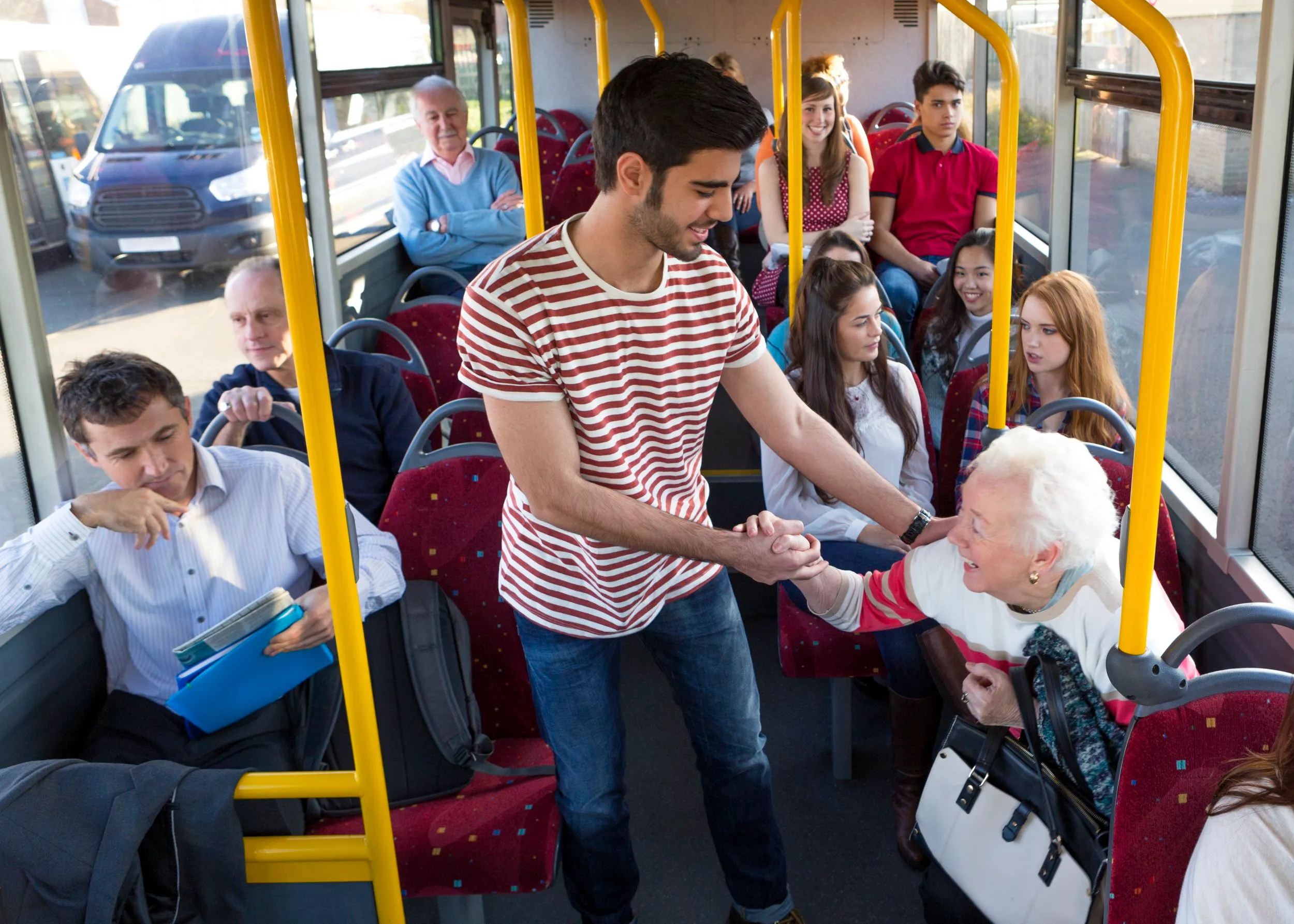
Giving up a seat is a small act of attention that can make a journey safer and less exhausting for somebody who needs to sit. The important skill is not deciding who looks deserving; it is noticing the carriage or bus, responding to requests and offering without creating a public test of another person's age, health or disability. Look up regularly, especially when occupying a marked priority seat. Offer without fanfare—‘Would you like this seat?’—then stand far enough away for the person to take it without having to explain themselves. Consider people who are pregnant, older, injured, carrying a baby or visibly unsteady, while remembering that pain, fatigue, balance problems and many disabilities may not be visible. Accept a no without insisting, touching or announcing why you asked. Someone may prefer to stand, need a different seat or be getting off soon. Equally, do not challenge a seated passenger because they appear healthy: they may need the place more than you do. If you cannot safely stand yourself, keep your seat and, if useful, help attract staff or another passenger's attention. When you do move, take bags with you, hold a rail before the vehicle starts and avoid blocking doors or wheelchair spaces. A genuine offer is enough even when it is declined; the achievement is making shared transport more usable without demanding gratitude. Completion is one considerate, pressure-free exchange in which the other person retains privacy and choice—not performing generosity for an audience or policing priority seating.