Camp Safely in the Desert
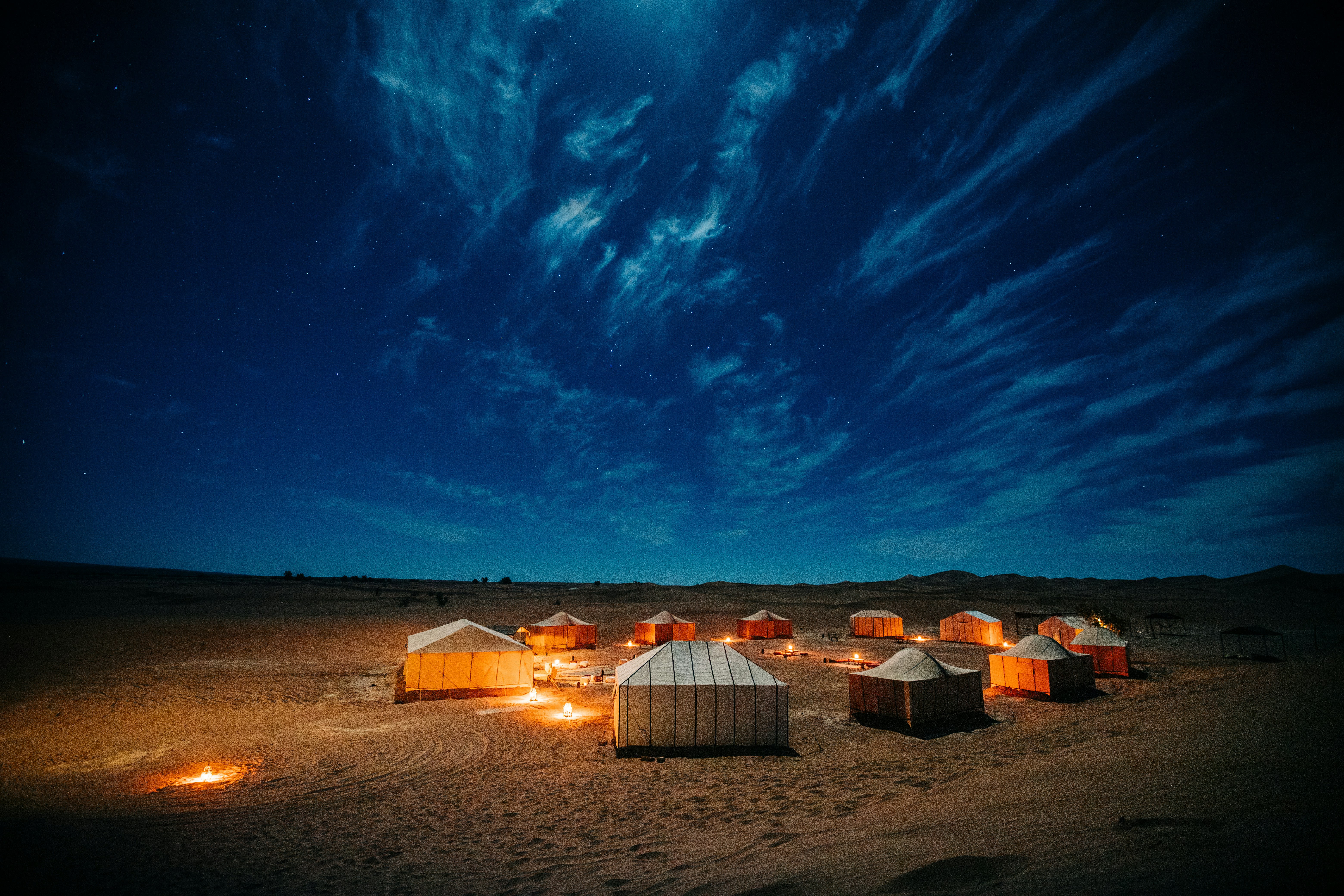
As the sun drops, heat leaves the ground and the desert changes character. Wind softens, distant ridges darken and stars arrive without the glow of a town beneath them. By dawn, the first light reaches the tent and the practical work of water, shade and packing begins again. Choose a lawful established campsite or permitted backcountry area, and learn the particular desert rather than treating all empty-looking land alike. Fragile soil crusts, wildlife, archaeological sites and private or Indigenous land can be harmed by a careless camp. A dry wash may also flood from rain that falls far beyond your horizon. Check weather, fire, access and vehicle conditions; carry more water than the minimum; share your route and return time; and bring shade, warm night layers, navigation and reliable communication. Avoid extreme heat and storm forecasts, never camp in a drainage channel, and use a guide for a remote first trip. An established accessible pitch or vehicle camp counts fully. Count it complete after one safe, low-impact night and a full pack-out that leaves no trace of your stay. Add it if you want darkness, temperature and distance to strip a night back to essentials—preparation before sunset, a sky with depth, and morning earned by looking after yourself and the place.