Go ice swimming
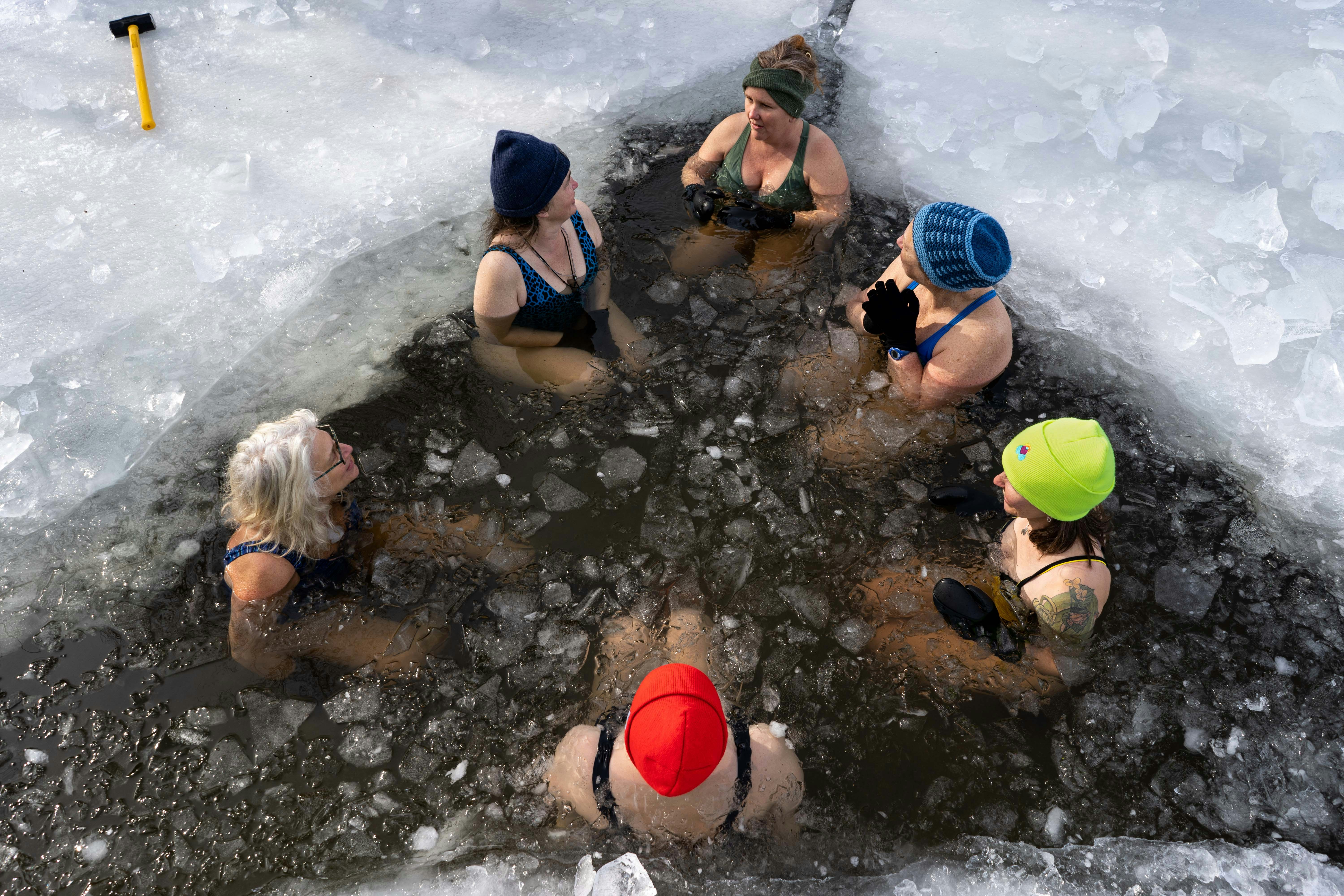
Your feet enter first, your breathing objects immediately and every sensible instinct asks why the rest of you is following. Ice swimming means entering water cold enough to demand respect, sometimes through a cut opening in frozen water and sometimes in an unfrozen winter lake or sea. The first achievement is not distance. It is staying calm and getting out safely. Cold water can trigger an involuntary gasp and rapid breathing before muscles begin to cool. Experienced swimmers build familiarity gradually, keep immersions short and organise the exit before entering. Formal ice-swimming events use defined temperatures and distances, but a first attempt should be a supervised dip rather than a test of endurance. Join an established group or professionally supervised session, never swim alone and enter gradually rather than jumping or diving. Check depth, current, weather and the route out. Take warm layers, footwear, a towel and a hot drink for afterwards, then dress promptly. Anyone with health concerns should seek appropriate medical advice before starting. Add this to your list for a small, sharp challenge that makes an ordinary warm room feel luxurious.