Go Oyster Hunting
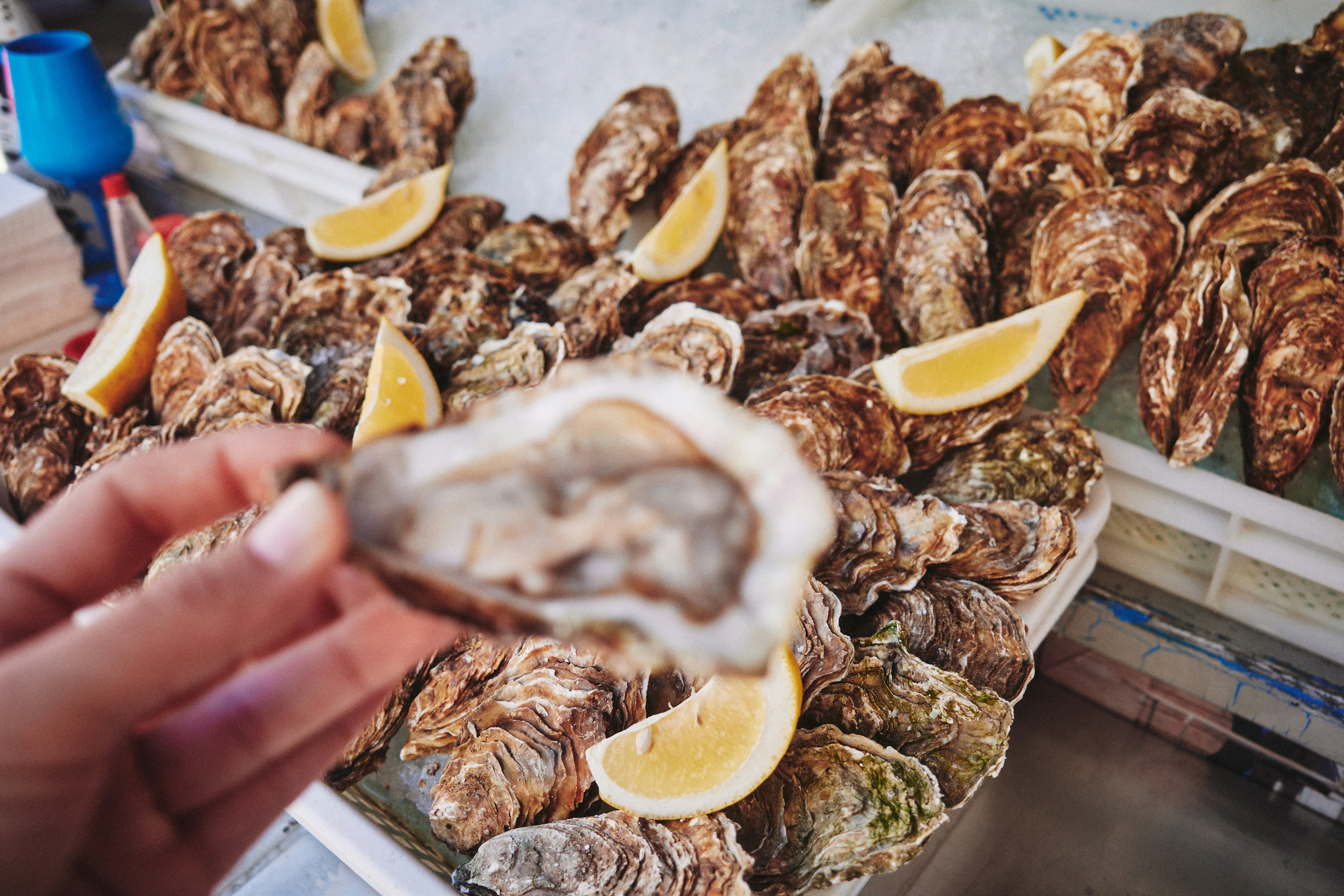
Oyster hunting is intertidal foraging for native or Pacific oysters on a shore where gathering is permitted. Finding a rough shell among rock and weed connects food with tide, habitat and careful identification. It is not simply picking free seafood: ownership, fishery rules, minimum sizes, conservation designations and contamination can make removal unlawful or unsafe. Go with a knowledgeable local guide and check the landowner, harbour authority, Inshore Fisheries and Conservation Authority and environmental health advice for the exact bed. Rules and personal limits vary by region, and commercial gathering requires classified production areas and traceability. Never collect from a closed, polluted, private or protected site, sewage-affected water or an area without current local confirmation. Consult tide tables and weather, work on a falling tide with a clear return route, wear cut-resistant gloves and sturdy footwear, and avoid unstable mud, channels and sharp shells. Take only the permitted number and size, return undersized oysters where found and minimise disturbance to reefs and other species. Do not eat during collection or assume clear water means safe shellfish. Wild bivalves can accumulate E. coli, norovirus, marine biotoxins and chemical contaminants; cooking does not reliably remove every toxin. People who are pregnant, immunocompromised or have certain health conditions need particular caution and professional advice. Completion is a legal, guided forage that identifies the habitat and gathers only safe, permitted oysters—or deliberately takes none when conditions fail—not eating an unverified raw catch or damaging a living reef.