Kayak down rapids
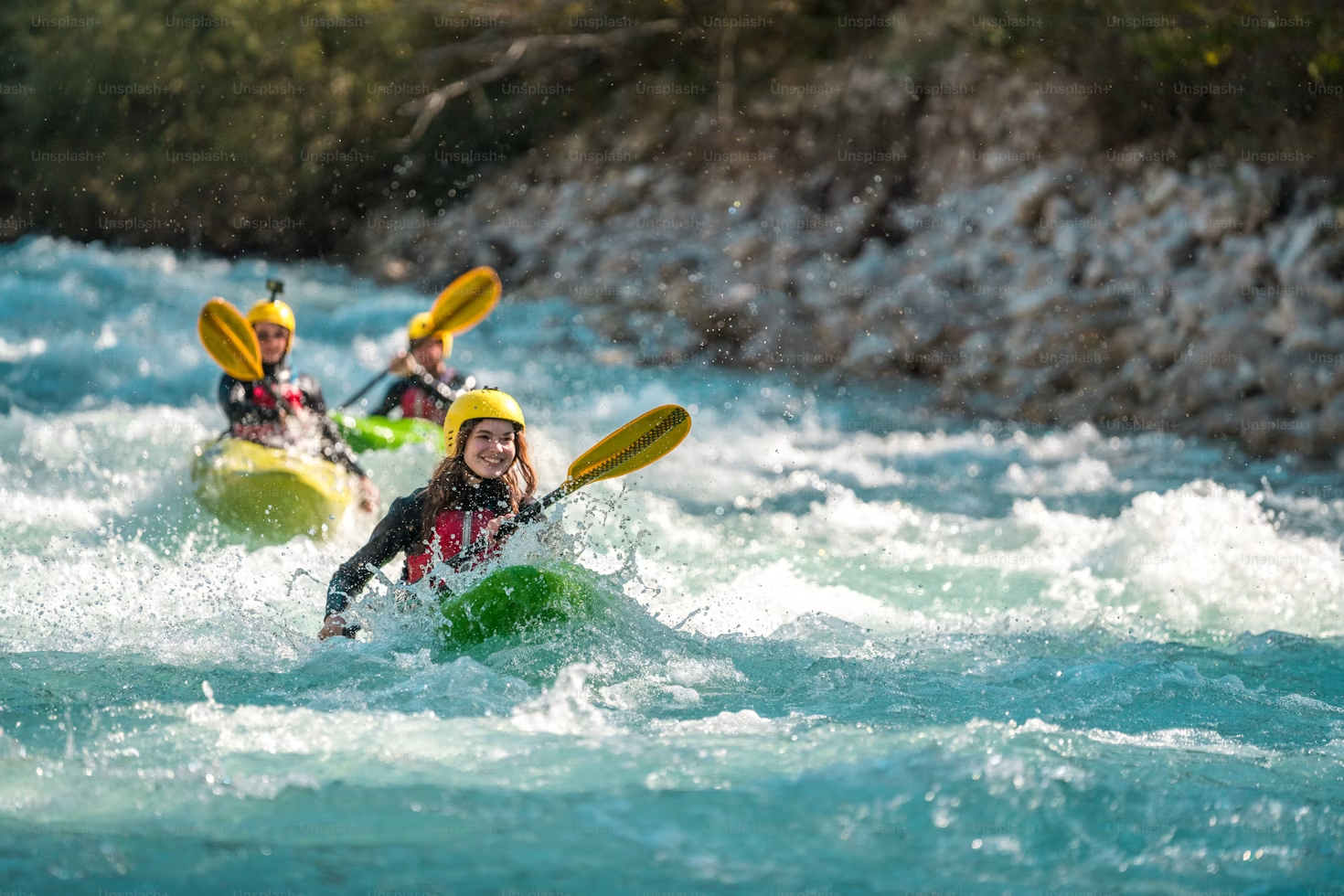
White-water kayaking uses paddle strokes, edging and river reading to move a short responsive boat through waves, eddies and current. The excitement comes from choosing a line and adapting as the water acts on the hull, not simply surviving a fast descent. For a first experience, a coached artificial course or suitable low-grade river creates challenge without pretending experience is optional. Start with a recognised paddlesport centre, club or qualified leader and state your swimming ability, fitness, medical needs and previous kayaking honestly. Learn flat-water control, capsize exit and basic rescue before progressing. British Canoeing Awarding Body's white-water safety training assumes relevant paddling ability because moving-water boat control is already necessary; novices should not launch independently into natural rapids. Use a correctly fitted white-water kayak, buoyancy aid, helmet, spraydeck and clothing suited to the water temperature, plus footwear that stays on. Check river level, weather, access, hazards, group plan and emergency arrangements. Never paddle alone, above the leader's chosen grade, after alcohol or without understanding how to release the spraydeck and adopt a safe swimming position. Follow spacing and signals, avoid standing in fast water and never reach into a pinned boat or tensioned rope without rescue training. Accept portage, cancellation and swimming as information rather than failure. Completion is paddling a supervised stretch of genuine rapids at an appropriate introductory grade and using the taught line and safety system—not remaining upright throughout, running a named difficult rapid or treating one guided descent as independent competence.