Learn to do pottery or ceramics
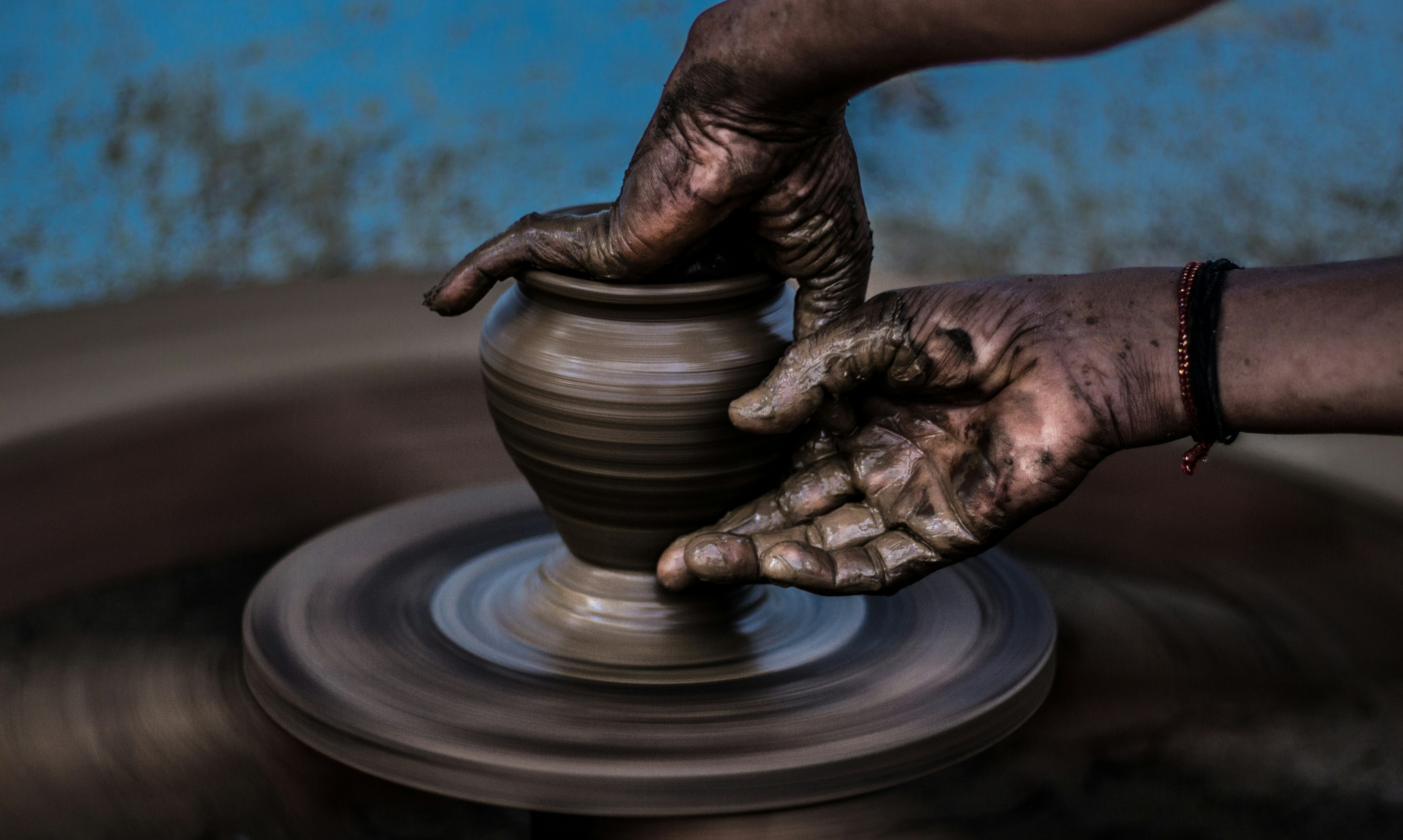
Pottery turns a soft, responsive material into an object that can outlast its maker. Pinching a bowl, building with coils or centring clay on a wheel teaches pressure, patience and attention to form. The transformations continue after your hands stop: drying, firing and glazing all affect whether the finished piece keeps its shape and purpose. Book a beginner course at a properly equipped studio and ask whether tuition, clay, glazing and both firings are included. Hand-building gives an accessible first route; wheel throwing adds the challenge of centring and coordinated movement. Tell the tutor about respiratory, skin, mobility or access needs, wear clothes that can become dirty and keep nails and jewellery practical for the session. Follow the studio's controls for clay and glaze materials. Fine silica-containing dust is a serious hazard, so do not dry-sweep, sand fired or unfired work, or mix powdered materials without the studio's training and controls; keep cleaning wet and leave kiln operation to authorised people. Wash clay from hands before eating, use only studio-approved food-safe glaze systems for functional ware and never assume an attractive glaze is suitable for food. Make several small pieces and accept that cracking, warping and glaze variation are part of learning. Compress joins carefully, allow work to dry at the rate the tutor recommends and record clay, glaze and firing details so results can be understood. Completion is taking at least one self-made piece through forming, drying, glazing and firing safely—not purchasing a wheel, producing a flawless matching set or running a kiln without competent instruction.