Make something on a pottery wheel
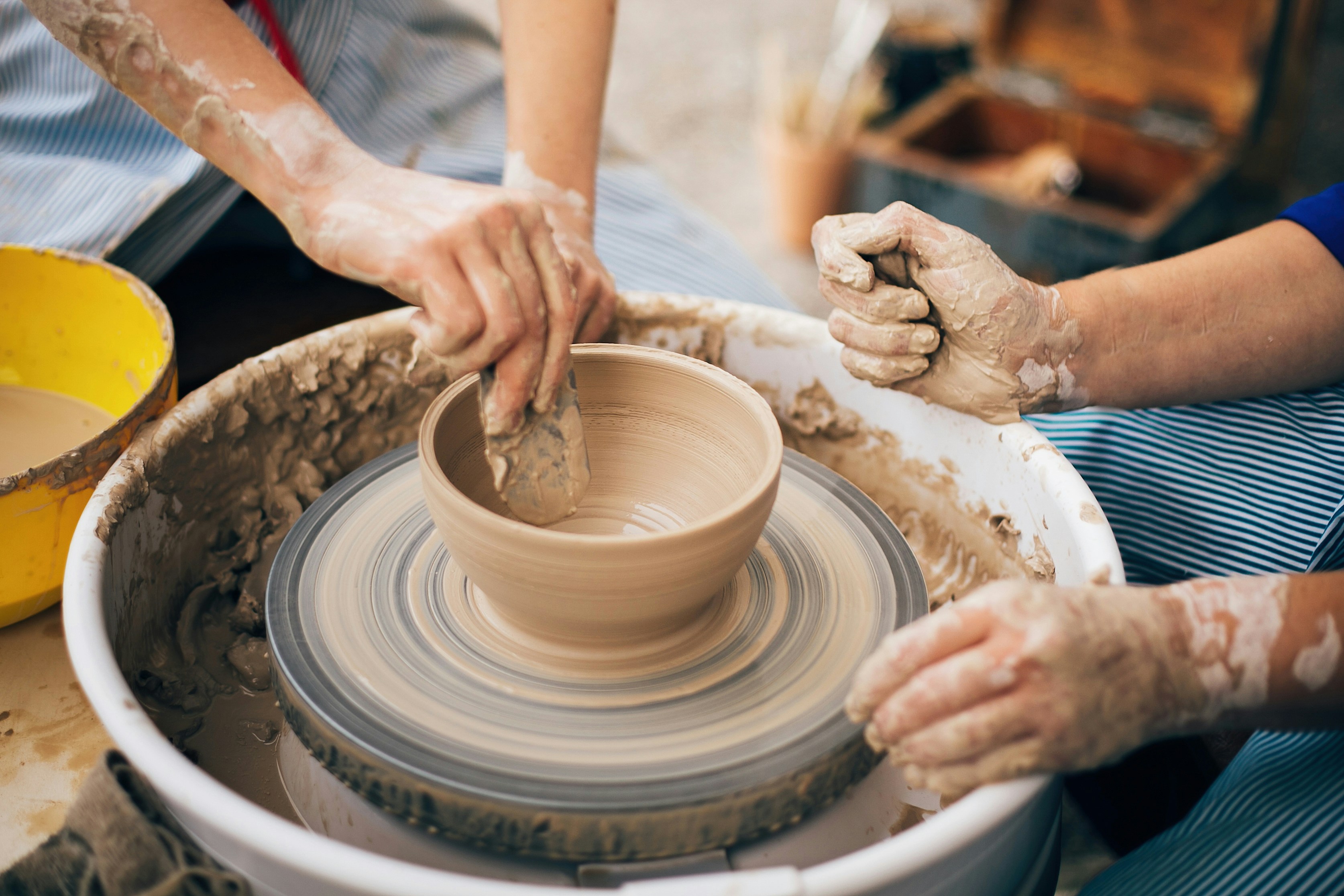
A pottery wheel asks your hands to centre moving clay before it can become a cup, bowl or cylinder. The process is physical and immediate: pressure that is uneven becomes a wobble, while a stable base allows the walls to rise. Producing one modest vessel is an absorbing achievement because balance, water and timing are visible in every line. Book a beginner session at a properly equipped studio where an instructor prepares the clay, demonstrates the wheel and manages drying, glazing and firing. Wear close-fitting old clothes, remove jewellery, tie back hair and trim nails if practical. Tell the tutor about mobility, back, hand or skin needs so the wheel height, seating and task can be adapted. Keep the wheel slow while learning, brace the arms and use only the pressure demonstrated. Stop the machine before reaching for dropped tools or cleaning around moving parts. Use water sparingly and wipe wet clay from surfaces with a sponge; never dry-sweep, sand or blow clay dust. Pottery materials can contain respirable crystalline silica, so studio dust controls matter even when the session feels informal. Wire the finished piece from the bat only when instructed and agree whether it will be trimmed, handled, glazed and fired. Use studio-approved food-safe glaze if the vessel may hold food, accepting that firing can crack or distort a first piece. Completion is throwing and retaining one coherent object through the studio’s safe process—not operating an unsupervised kiln, taking wet clay dust home on clothing or judging the experience only by perfect symmetry.