Ride on a Tandem Bike
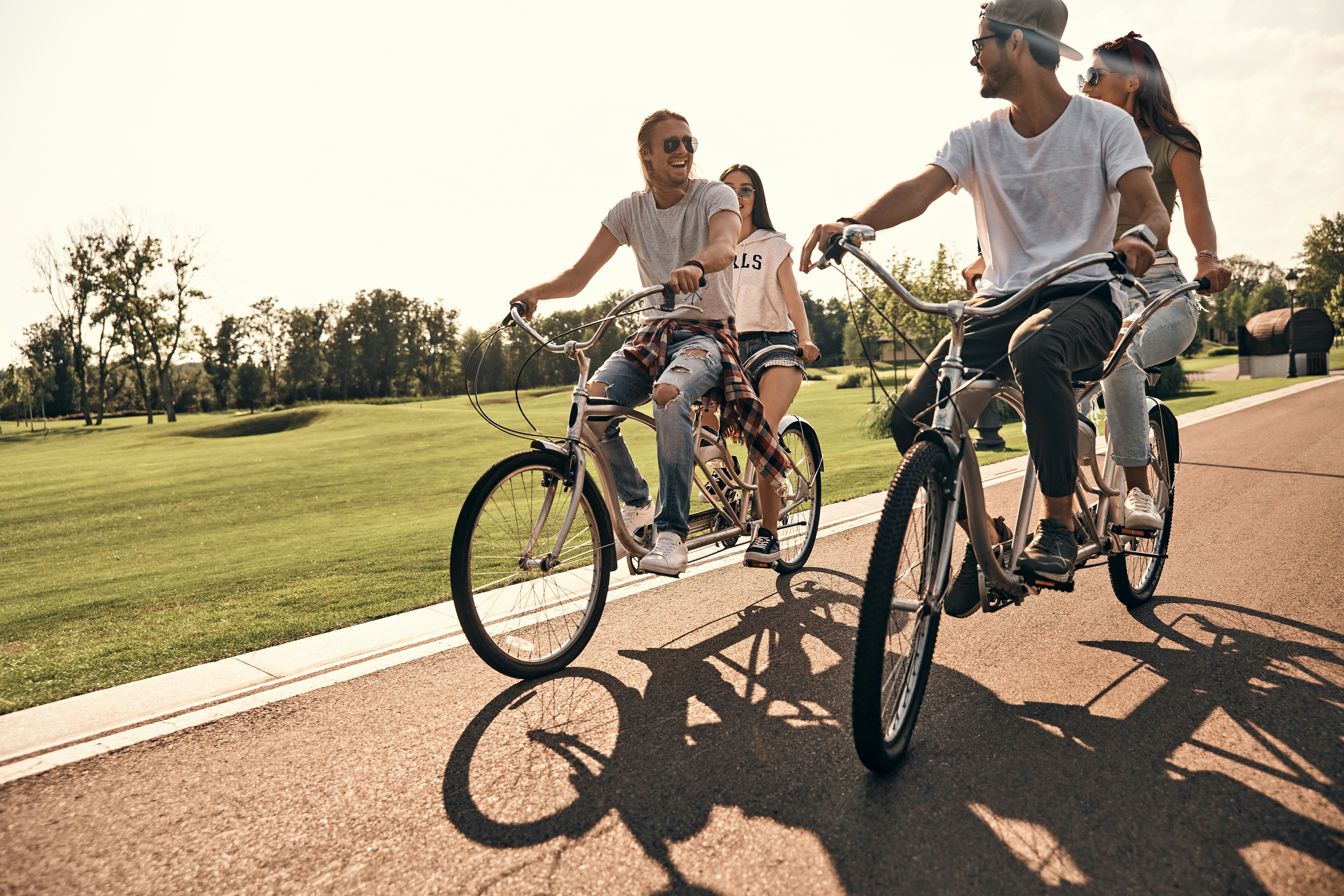
A tandem bicycle turns balance, cadence and direction into a two-person conversation. The front rider—the captain—steers, brakes and watches traffic; the stoker contributes power and follows agreed signals. Once both riders stop fighting the same machine, a tandem can feel remarkably smooth and sociable, including for some riders who cannot cycle independently. Hire from a reputable UK cycle centre or specialist and ask for sizing, route advice and a proper handover. Agree who will captain based on confidence rather than status. Practise away from traffic, with the captain holding the brakes while the stoker mounts first, then rehearsing starts, stops, gear changes and simple calls before a longer ride. Wear helmets, check tyres, brakes, chain and saddle security and use lights where visibility requires them. The captain must warn about braking, bumps and gear changes; the stoker should keep feet on the pedals until told otherwise. Avoid tight gaps, heavy traffic and steep descents until the pair can stop and restart reliably. Complete a short planned route with a controlled start, several communicated changes of pace and a safe dismount. Swap roles only in a traffic-free area if both riders are capable. Completion is moving as a coordinated pair—not racing, surprising the stoker with a manoeuvre or assuming that two experienced solo cyclists automatically understand tandem handling.