See the Northern Lights
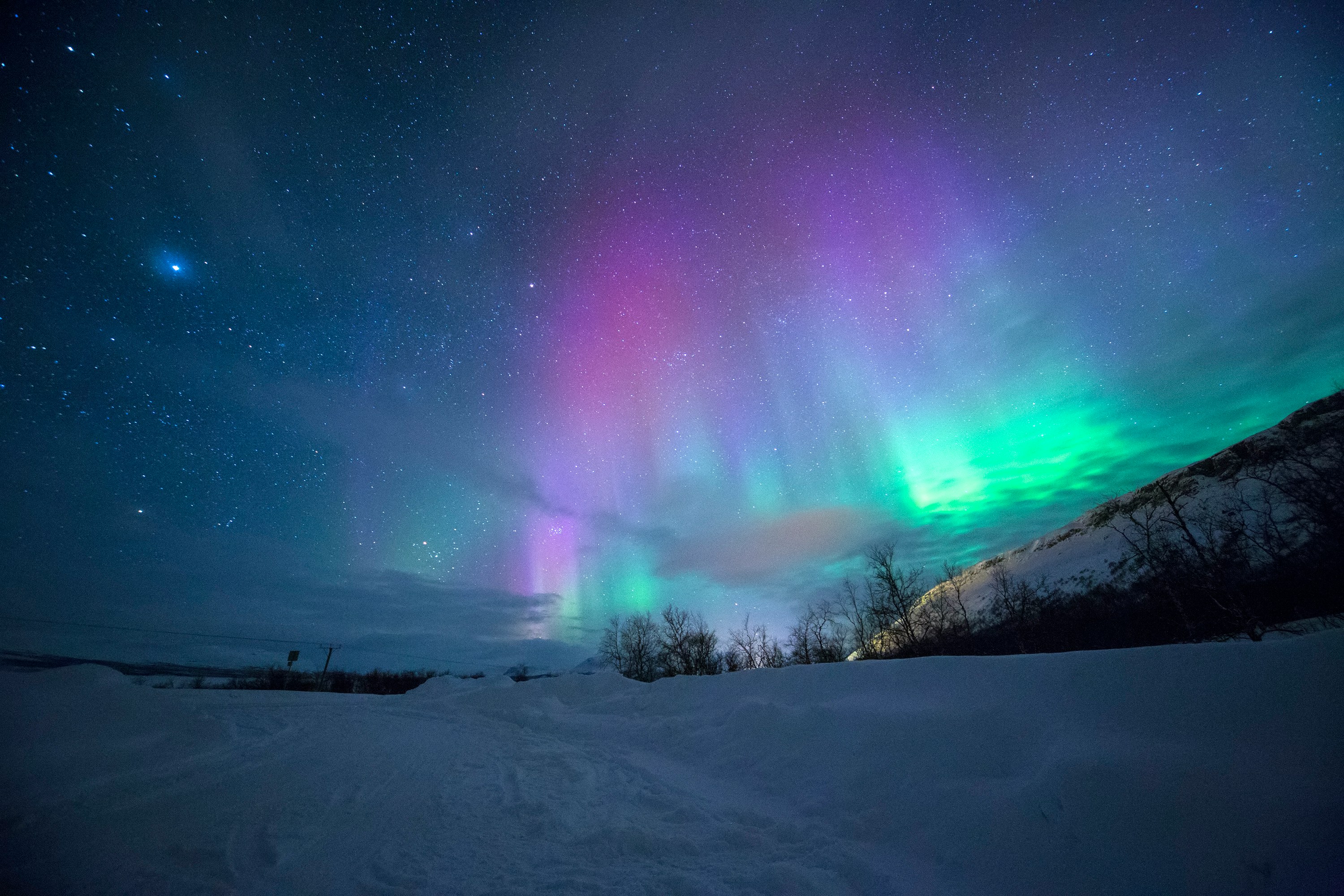
Step outside into a dark northern sky and wait for the first pale streak to appear. Sometimes the aurora begins as a faint green arc; sometimes it arrives in moving curtains, twisting bands or sudden bursts that spread across much of the sky. The colours can look subtler to the naked eye than they do in long-exposure photographs, but when activity is strong, the movement and scale are unmistakable. The Northern Lights, or aurora borealis, are produced when charged particles from the Sun interact with Earth’s magnetic field and collide with gases high in the atmosphere. Oxygen is responsible for the most common green aurora, while stronger displays can also produce red or purple tones. The phenomenon occurs around the polar regions, but stronger geomagnetic activity can push visible aurora much farther south. For the best chance, travel somewhere within or near the Arctic auroral zone during months with properly dark nights, then give yourself several evenings rather than relying on one forecast. Northern Scandinavia, Iceland, Alaska and northern Canada are all established options. In Finnish Lapland, for example, the main viewing season runs from late August to early April, with clear skies and low light pollution as important as solar activity. Add this to your list and stay outside long enough for the sky to decide whether it is going to perform.