Visit Angkor Wat in Cambodia
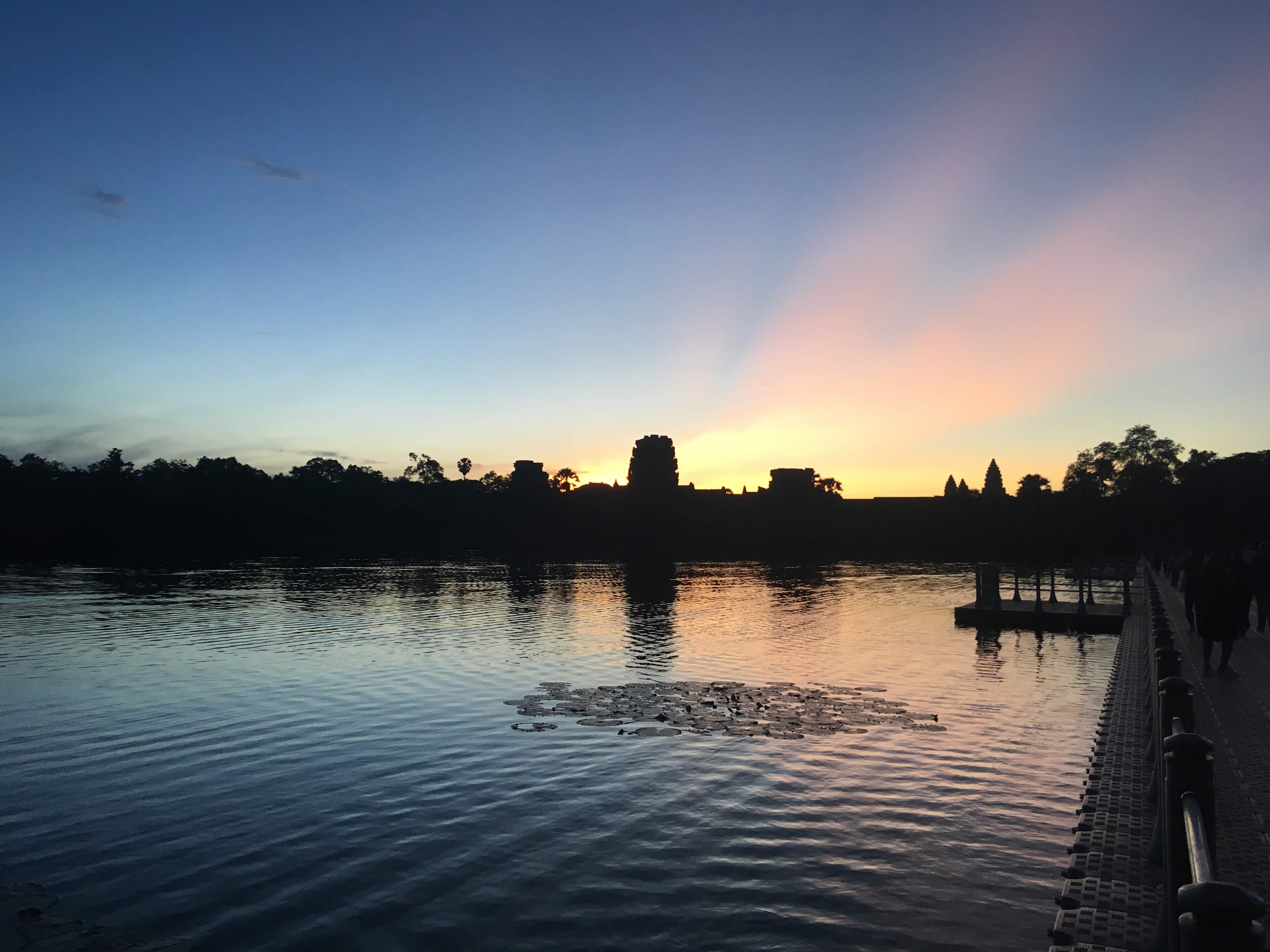
Before sunrise, Angkor Wat is mostly a dark outline and a reflection held in the ponds. Then the galleries, towers and long causeway take shape, and a celebrated silhouette becomes a vast piece of architecture built to be approached in stages. The temple is only one part of Angkor, but it is an extraordinary doorway into a city and water system that once organised life on a monumental scale. Give Angkor Wat several hours and the wider archaeological park at least two or three days. After the popular dawn view, stay while some visitors leave, walk the bas-relief galleries slowly and add contrasting sites such as Bayon, Ta Prohm or less busy temples according to the current route rules. A licensed local guide can connect the carvings, religion, engineering and later history without turning the visit into a list of names. Buy the official Angkor pass only through Angkor Enterprise, carry water and sun protection, and dress respectfully with shoulders and knees covered for active sacred spaces. Heat, steep steps and uneven surfaces are significant, while access differs greatly between temples. Do not touch carvings, climb closed structures or use children as photographic subjects or sources of purchases. Count this as complete after entering Angkor Wat, spending meaningful time with its architecture and reliefs, and seeing enough of the wider park to understand that the temple belonged to a connected landscape. Sunrise is optional; attention after the sun has risen is what turns the famous image into a place.