Visit Sigiriya in Sri Lanka
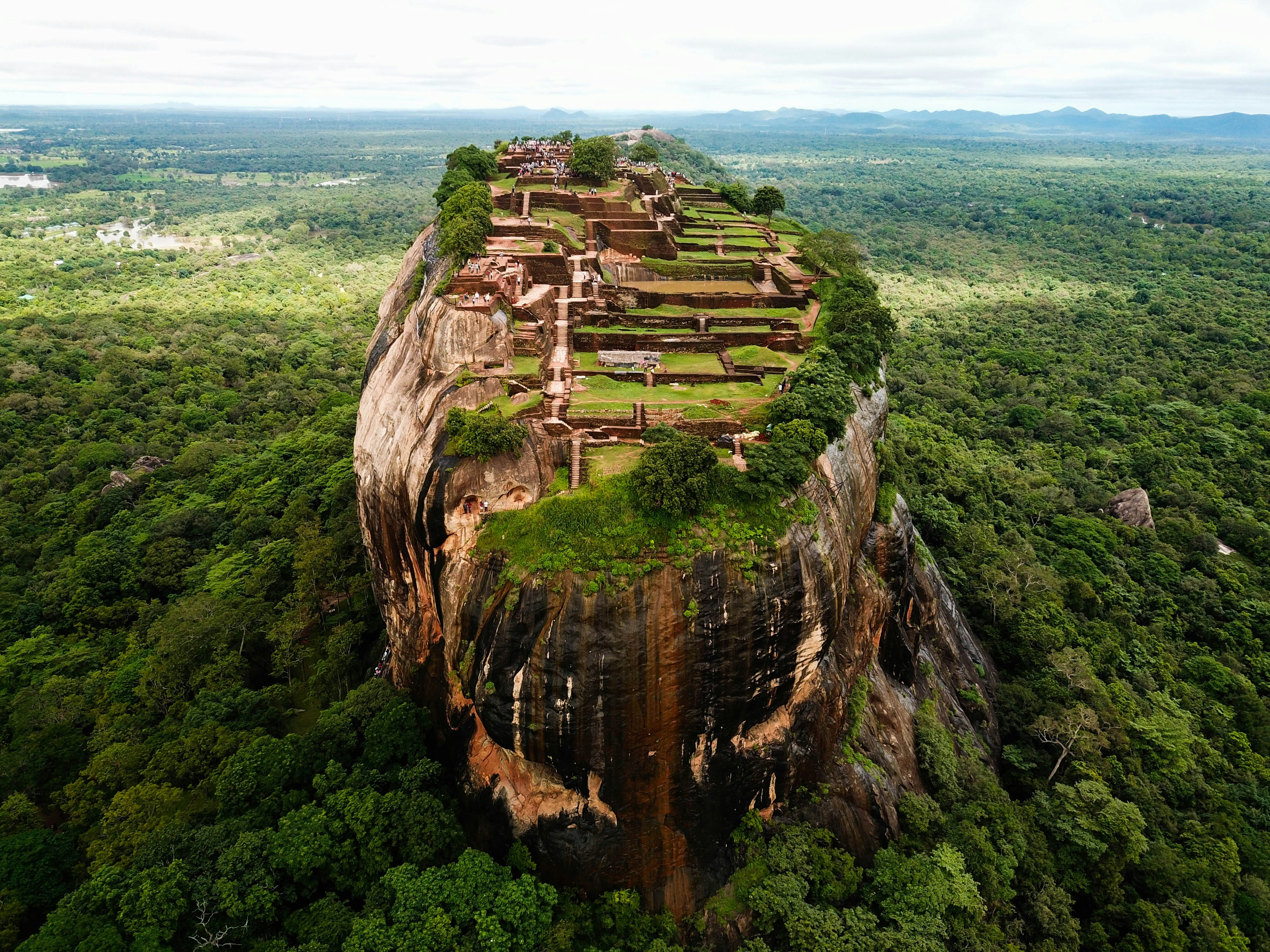
Climb towards the top of Sigiriya and the scale of the place becomes increasingly strange. The rock rises almost vertically from the surrounding plain, with gardens, pools and ruined structures laid out below and a sequence of stairways carrying you towards the summit. Halfway up, the remains of the Lion Gate mark the entrance to the upper citadel; farther on, the final ascent opens onto the foundations of a fifth-century royal complex around 200 metres above the landscape. Sigiriya was developed as a fortified royal centre in the fifth century and is now one of Sri Lanka’s UNESCO World Heritage Sites. Its importance lies not only in the palace ruins on top, but in the planning and engineering of the entire site: formal water gardens, defensive structures, sophisticated hydraulic systems and surviving frescoes are integrated around the rock itself. Sri Lanka Tourism describes it as one of Asia’s best-preserved urban sites from the first millennium. Allow two to four hours to explore the site properly, including the climb, and start early if you want to avoid tackling the exposed upper sections in the strongest heat. The ascent involves a substantial number of steps and some steep metal staircases, so comfortable footwear and water matter more than specialist equipment. Sigiriya fits naturally into a wider Sri Lankan trip through the Cultural Triangle, alongside places such as Dambulla and Polonnaruwa. Add this to your list and climb one of the most improbable ancient citadels you’ll ever see.