Witness a Total Solar Eclipse Safely
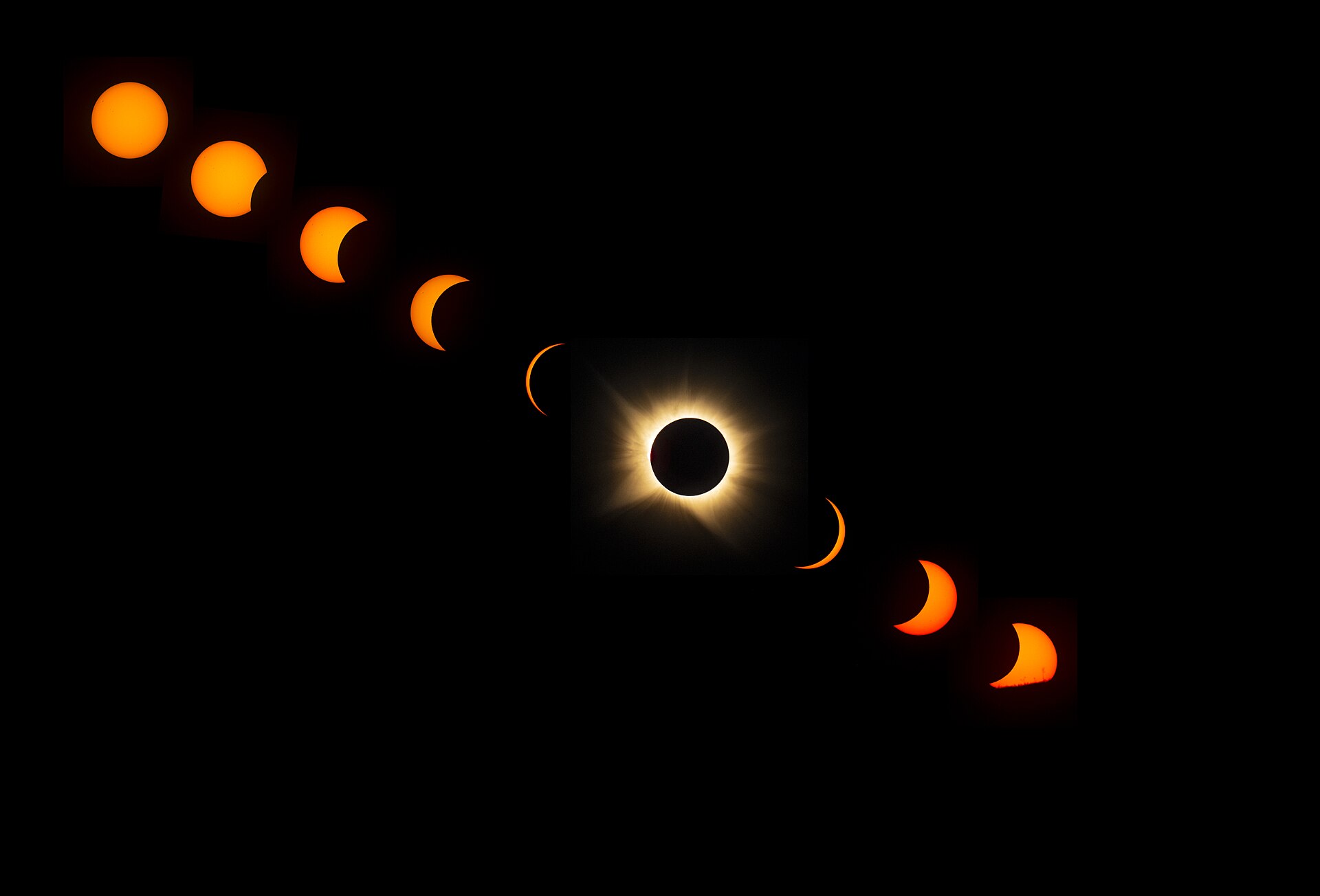
Daylight thins, the temperature drops and shadows sharpen into unfamiliar shapes. Then the Moon covers the Sun completely and the corona appears around a black disc while the horizon resembles sunset in every direction. Totality may last only minutes, but the landscape and everyone in it seem to pause together. Choose a future total-eclipse path using current astronomical data, then plan for weather, transport, crowding and a lawful viewing location. A partial eclipse is worth seeing, but it does not become safe to view without protection. Never use ordinary sunglasses, smoked glass, camera film or an unfiltered camera, telescope or binoculars. Use viewers meeting ISO 12312-2 from a reputable source and inspect them before use. Optical equipment needs a proper solar filter mounted on the front. Only during totality—when the bright face of the Sun is completely covered—may protection come off; replace it before any bright sunlight returns. Children and anyone unsure of the timing need close supervision. Count it complete after safely observing totality from within its path, or record a partial eclipse separately if clouds or travel make totality impossible. Add it if you want to witness celestial motion not as a diagram, but as a sudden change in light, air and human attention that no photograph quite reproduces.