Five more of our favourite new features on 42 Things To Do
From My Plan and a rebuilt Coach 42 to better progress records and more useful communities, these changes are designed to help you get things done.
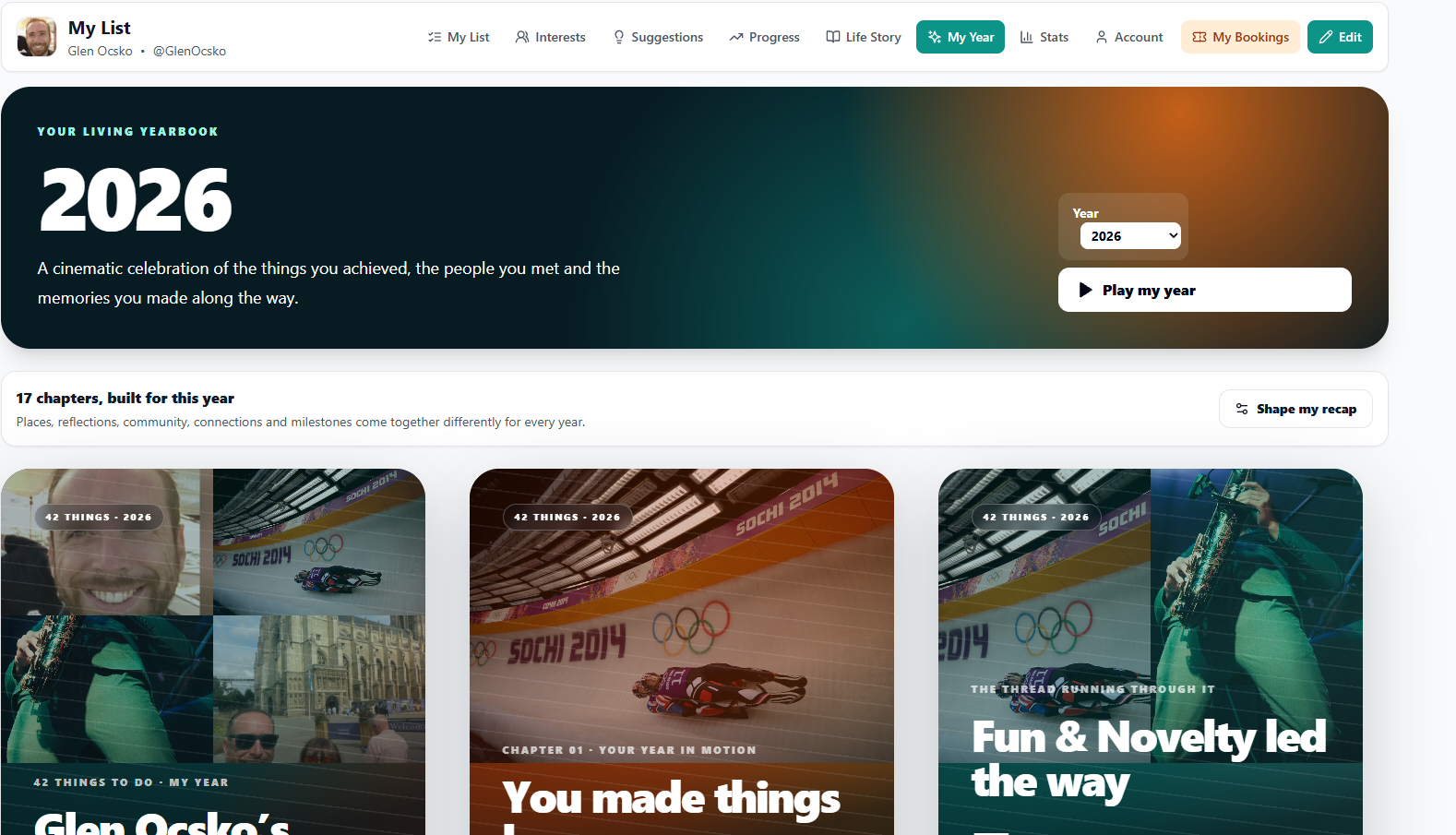
In part one, we looked at five new ways to find things worth doing, including the improved quiz, map-based discovery, collections, Challenges and better ways to get help from other people. Finding an idea is only the beginning, of course. Most of us already have plenty of things we’d like to do. They’re written in notebooks, saved in phone apps, buried in browser bookmarks or stored somewhere in the back of our minds until a suspiciously energetic Monday morning. The harder part is remembering what we planned, working out the next step and maintaining enough momentum to finish it. That’s where the next five changes come in. 1. All your plans in one place Adding something to a list takes seconds. Completing it might involve research, decisions, bookings, training, saving money or persuading somebody else to come along. Previously, those plans sat inside the individual activities. That worked when you were concentrating on one thing, but became less helpful once several activities were underway. You had to remember where every action lived and keep opening different plans to find out what needed doing next. My Plan brings those actions together. Instead of treating each activity as a separate little project, you can see the practical steps from across your list in one place. That might include choosing a date, researching a route, buying some equipment or making the first booking. Dates help you see what needs attention first. Completed actions can be ticked off, and the remaining steps stay visible rather than disappearing inside an activity you haven’t opened for three weeks. It also makes it easier to spot when you’ve become a little overenthusiastic. Planning to learn Italian, run a marathon, renovate the kitchen and travel across South America at the same time may be ambitious even by our standards. My Plan gives you a more realistic view of what you’ve committed to and what the next useful action actually is. We have more planned for it, including better reminders and scheduling, but bringing everything together was the essential first step. 2. A much better Coach 42 The original Coach 42 could have a useful conversation and help you think through a goal. The new version has a much clearer job: helping you move from talking about something to taking action. You can choose the style of coaching that suits you. A supportive coach will encourage you and help you recover when plans slip. An analytical coach will focus more heavily on structure, milestones and timelines. Tough-love mode is there for people who would prefer slightly less sympathy and a rather firmer shove. You can change that choice whenever you want. Being challenged may help with one goal and be deeply irritating with another. Coach 42 also has a better understanding of your activities and previous conversations. If you’re discussing something already on your list, you shouldn’t have to start by explaining the whole thing again. It can use the context it already has, help you break a large ambition into manageable steps and adjust the plan when real life gets in the way. That last part matters. Plans change. Budgets disappear. People get injured. Weekends fill up and supposedly straightforward jobs become much bigger than expected. A useful coach needs to work with the situation you’re actually in, rather than continuing to insist that you follow a plan which stopped making sense a month ago. Most importantly, the conversation can lead somewhere. Useful actions can become part of your activity plan, giving you something specific to do once the chat is over. Coach 42 is available at any time, doesn’t mind if you repeat yourself and won’t become offended when you ignore its advice. That already puts it ahead of several human beings I know. 3. A proper record of what you’ve achieved Bucket lists tend to focus heavily on what hasn’t been done. There may be 42 things on the list, but your eye goes straight to the unfinished ones. Complete something and, after a brief moment of satisfaction, attention moves to the next target. We wanted the platform to do a better job of remembering the other side of the story. Your records now give you a clearer view of what you’ve completed, what you’ve started and how your activity has changed over time. You can look back at your year, see your lifetime progress and build a lasting record of the things you have actually done. Some will be major milestones. Others might be enjoyable afternoons, personal firsts or small things that mattered at the time. They all count. That record should become more valuable the longer you use 42 Things To Do. A completed activity can include the date, your rating, progress updates, photographs, posts or a longer blog about the experience. Years later, you aren’t simply looking at a tick beside a title. You have some of the story behind it. It can also reveal patterns that are difficult to notice while you’re busy living them. Perhaps you did much more than you remembered. Perhaps one year was full of travel and another was dominated by learning something new. Perhaps your interests changed completely. Looking forward matters, but it’s also worth occasionally noticing how far you’ve already come. 4. A community built around doing things The community section has had one of the largest rebuilds anywhere on the platform. Members can share progress, ask questions, post photographs, write longer blogs and connect updates to the activity or challenge they’re talking about. If somebody mentions an activity that appeals to you, you can open it or add it to your own list from the post. The feed now gives you much more control over what you see. You can browse recent posts, focus on people you follow, find blogs, include or hide replies and return to content you’ve saved. Hashtags work properly too. They’re clickable, have their own pages and help bring related conversations together. Trending topics make it easier to see what people are discussing without assuming that everyone wants to read exactly the same things. Posts now support the familiar interactions people expect, including likes, replies, reposts, saves and sharing. Profiles connect those conversations to the person behind them, including their public activities, completed goals and previous posts where they have chosen to share them. We’ve also improved the process of writing a post. A completely empty box is surprisingly unhelpful, so the composer now gives people a clearer route into sharing an update, asking something or talking about an activity. The aim is a community that remains useful even if you never feel the urge to announce what you had for breakfast. It exists to swap experience, get practical help, celebrate progress and occasionally provide the encouragement someone needs to stop putting something off. 5. Smaller communities for shared interests A single main feed can only go so far. Someone planning a long-distance hike may want detailed advice from experienced walkers. A person learning an instrument will probably get more useful help from others interested in music. People taking part in the same challenge may want somewhere to compare progress without filling the wider community with every update. Focused communities give those conversations somewhere to live. There are dedicated spaces built around the main activity categories, including travel, food and drink, learning, sport, creativity, nature, technology and plenty more. Challenges can have their own spaces too, keeping participants and their updates connected. Membership is opt-in. You choose the spaces that interest you rather than being added automatically because you once clicked on an activity. You can search the available communities, browse by type and join the ones that feel relevant. Some topics also need a little more care. Communities covering areas such as health and wellbeing, relationships, identity or politics can have extra privacy and age restrictions rather than being treated exactly like a discussion about baking bread. These spaces are starting points and will only become genuinely useful as more people join them. The structure is now there, though, and it gives conversations a much better chance of reaching the people who may have something useful to contribute. More than somewhere to keep a list A list is a start. The useful bit is what happens after you write it. These changes give you somewhere to organise the practical work, get help when you’re stuck, keep a record of what you’ve achieved and meet people who understand what you’re trying to do. There is plenty more to build. My Plan will become smarter, Coach 42 will keep improving and the communities will develop as people begin using them properly. For now, though, 42 Things To Do is much better at helping an idea survive the journey from “I’d love to do that” to “I did it”.