Force majeure
Sometimes the best laid plans are ruined by rain.
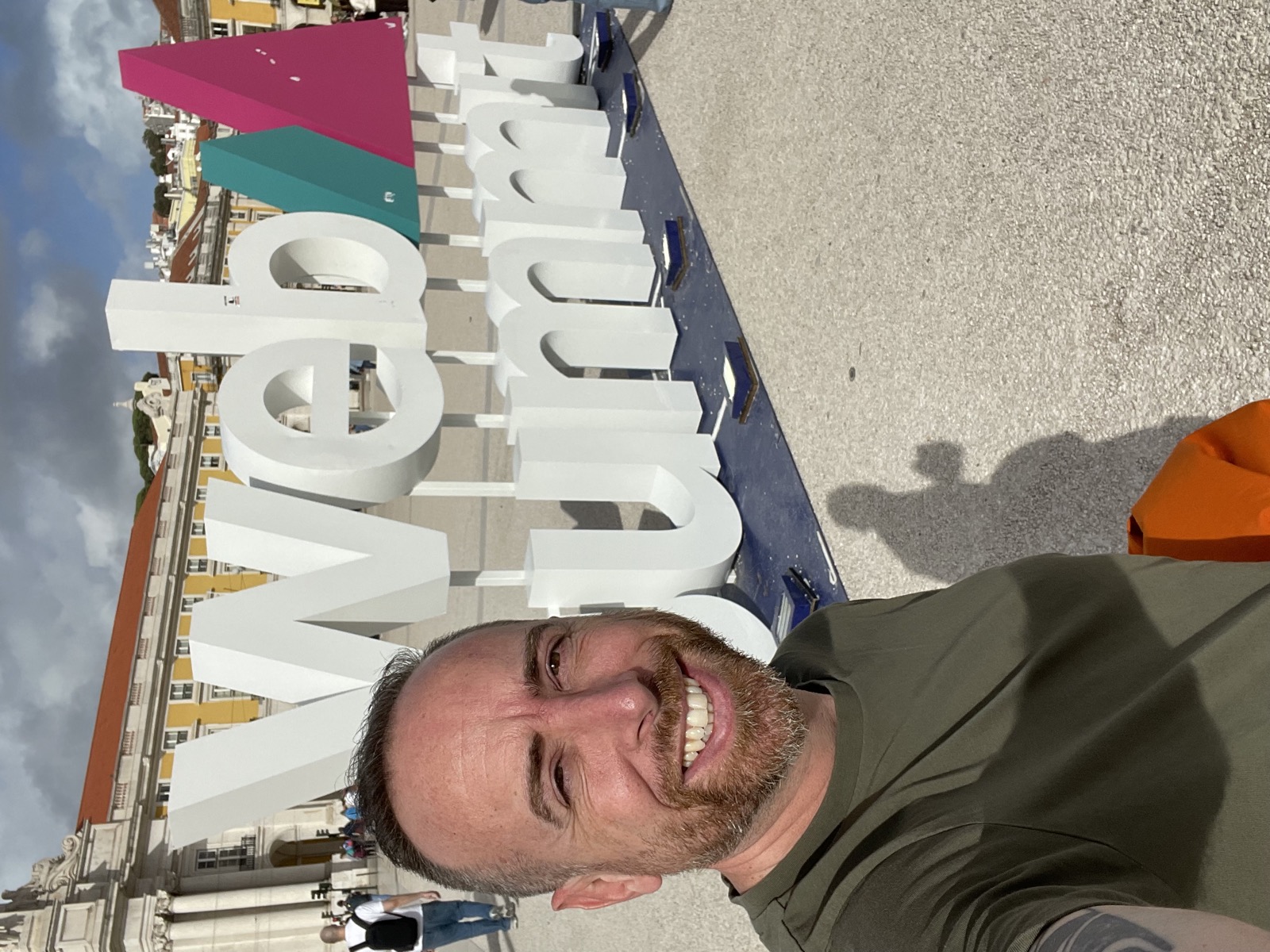
Force majeure I hadn’t expected to need that phrase when I came to Web Summit. But after months of preparing to exhibit 42 Things To Do at one of the biggest tech events in the world, I had to accept that sometimes you get the unexpected whether you like it or not. I don’t want to get ahead of myself, though. Before the language lesson came Lisbon. Web Summit is a huge event. I mean properly huge: 75k people in Lisbon, with other events taking place in Doha, Vancouver, and Brazil throughout the year. It brings together multi-national corporations and companies who are no more than an idea, and everything in between, as well as investors large and small. Attendees are welcome to walk the massive floors and sit in on demos, keynotes, and sales pitches, as well as dance with robots and try to win merch both useful and pointless. I was there as part of the Alpha programme, hoping to meet people who might become part of the journey for 42 Things in some way. The Alpha programme is for those who are more than just an idea, and who have something that they're looking to take either to full production or to scale. I'd have the chance to pitch to investors as well as to host a stand of my own for the first time, taking people through what we do and trying to get them to sign up. I’d spent months getting ready: launching features, preparing special offers and onboarding journeys, working on investor plans and business plans, and trying to make sure that when someone stopped at my stand I’d have something worth showing them. There’s only so much you can learn from sitting at home working on your own business; I wanted to put it in front of people and find out what happened. The opening ceremony for the whole event certainly made it feel as though I’d come to the right place. It was held in a massive arena, with slick presentations, dancing robots, flying cars that fit in the back of vans, and panels discussing what AI was going to do to all of us. Then everyone spilled into the opening Night Summit, where you could drink piña coladas out of hollowed-out pineapples, sing karaoke, play arcade games or minigolf, watch stilt walkers and jugglers, or head off to a nightclub. It was like something out of the best and worst parts of the sitcom Silicon Valley - there are worse ways to begin a business trip. The first full day was enormous. Stalls stretched from brand-new startups showing off their first apps to global companies with rather more money to spend on being noticed. Between those were talks, meetings and meetups, and the constant possibility that the next conversation might be a useful one. I went to sessions for UK founders, govtech people, people working with particular technologies, and people interested in startups and AI. I also bumped into one or two people I vaguely knew from work back home; clearly, travelling to Portugal is one way of catching up with your UK network. One conversation went somewhere I hadn’t expected. I was talking to a film producer about 42 Things and mentioned that being in the credits for a movie is on my own list. She offered to help me with it. I don’t know yet whether anything will come of that, but I loved that a conversation about the business could turn into a possibility for something I’d personally wanted to do. Those were the moments I’d come for. At first, there seemed to be plenty of them. I did get to some talks as well, although the title of a session and what you actually got weren’t always particularly closely related. One about why features are no longer a competitive moat sounded promising, only to spend much of its time discussing somebody’s rebrand. I’m sure it was a very good rebrand, but I’d still quite liked to have heard the talk I thought I’d gone to. And then there was the writing. On the startup boards, in the presentations, up on the big stages: so much slop. I spend a lot of time working with AI, so this isn’t an objection to using it. But once you’ve tuned into the rhythms and cadence of AI-written text, you start noticing it everywhere. There’s a weird sytle of polished prose that is almost impossible to describe, but which leaves me with the digital ick before I’ve even worked out what the company does. By the end, I was feeling nostalgic for badly chosen GIFs, clashing colours, tables that didn’t quite line up and the occasional spelling mistake. At least you could imagine the person who’d made them. Still, there was plenty to hold my attention, and by the end of the day I was fascinated and exhausted. The weather had been grim, with tonnes of rain and wind, but we were mostly indoors. It was something to complain about on the way between places rather than something that had seriously affected the trip. Then the rumours started about the storm coming the following day. That was the day I was due to exhibit. Shit. When the email arrived that evening, it confirmed that the organisers had taken government advice and cancelled day two. With a large part of the venue made up of temporary structures, and concerns about getting everyone safely to and from the site, they’d decided it couldn’t go ahead. I understood the decision. I was also properly gutted. For months I’d been working towards that particular day. The conversations so far had been encouraging; people liked the idea, said they’d sign up, and seemed interested in what I was doing. Exhibiting was supposed to give me the chance to take that further. Now I had a prepared business, a prepared pitch and nowhere to stand and deliver either of them. So that was my introduction to force majeure. Web Summit had become Wet Summit, and no amount of preparation was going to persuade the weather to cooperate. People did try to make the most of it. Side-events appeared, WhatsApp groups sprang up, and there was a lot of effort going into getting people together despite the cancellation. I loved that instinct. Thousands of people had travelled there to meet one another, and losing access to the venue didn’t have to mean losing the whole day. Unfortunately, most of those groups quickly became another place to be sold to. You’d join hoping to find out where people were meeting, or whether anyone fancied doing something useful with the day, and find a stream of pitches instead. If the first thing you contribute to a group is an advert for your business, I’m probably going to ignore the rest of your messages. You may have something brilliant to offer, but you’ve given me very little reason to want to have a conversation with you. Instead I got on with some of my day job and shipped a new feature for 42 Things. It was useful to have the time, although I could have done both of those things at home without flying to Portugal first. Day three was back on, which meant I was back at the meetups, including quite a few organised around where people lived or worked. I like to think digital businesses can transcend borders, but there’s still something lovely about meeting someone who spends their working life in the same part of the world as you. You can imagine seeing them again without either of you needing to book a flight. There are people I met whom I hope I’ll keep in touch with and see back home. There are also conversations I’m not sure had much point at all. I was interested in who people were and what they did, but that interest wasn’t always returned. Too often, it felt as though someone was listening only long enough to establish whether I could buy something or do something for them. If I couldn’t, there wasn’t much left to say. Of course people go to a business event hoping to do business. So did I. But I’d rather come away having met someone I wanted to speak to again than having endured a pitch from someone who’d barely bothered to find out who I was. After a few days, the difference becomes quite tiring. It also becomes surprisingly difficult to remember which conversation was which. Taking notes at these things is utterly essential; at the time you can be absolutely certain you’ll remember why you spoke to that person from Ukraine or what you promised to send the person from Bangalore, right up until you’re looking at their details afterwards with no idea. A name and a company tell you very little about why you wanted to stay in touch. Next time, I’m giving my memory considerably less responsibility. The organisers have offered me a replacement place at another event in the next twelve months. I could return to Lisbon, or go somewhere else, including Doha, Vancouver or Brazil. My immediate response is Brazil, obviously. Then the part of me responsible for making this business work points out that I should probably consider where I’ll get the most value, rather than which destination I most fancy visiting. Annoying, but fair. I enjoyed Lisbon. I enjoyed plenty of the event, and I’m glad I met some of the people I did. I hope a few of those conversations turn into something, whether that’s useful work, a friendship, another conversation over a drink, or my name appearing somewhere in the credits of a film. But I didn’t get what I’d hoped to get from Web Summit. The exhibition day was the main reason I’d paid to be there, and it didn’t happen. Would I spend four figures on a ticket again? I’m honestly not sure. The weather was beyond anyone’s control, and I can accept that without pretending the cancellation wasn’t a huge disappointment. Some of the other frustrations were much more avoidable. A little more curiosity about the person in front of you, a little less broadcasting, and something on your stand that sounded as though you’d actually written it would have gone a long way. If I take up that replacement ticket, I’ll arrive with a clearer idea of the conversations I want to have, take better notes, and try again to give 42 Things the exhibition day I’d planned for. I’ll also read the force majeure clause.