How to attend a radio show recording
What It’s Actually Like to Be in the Audience for a BBC Radio Recording
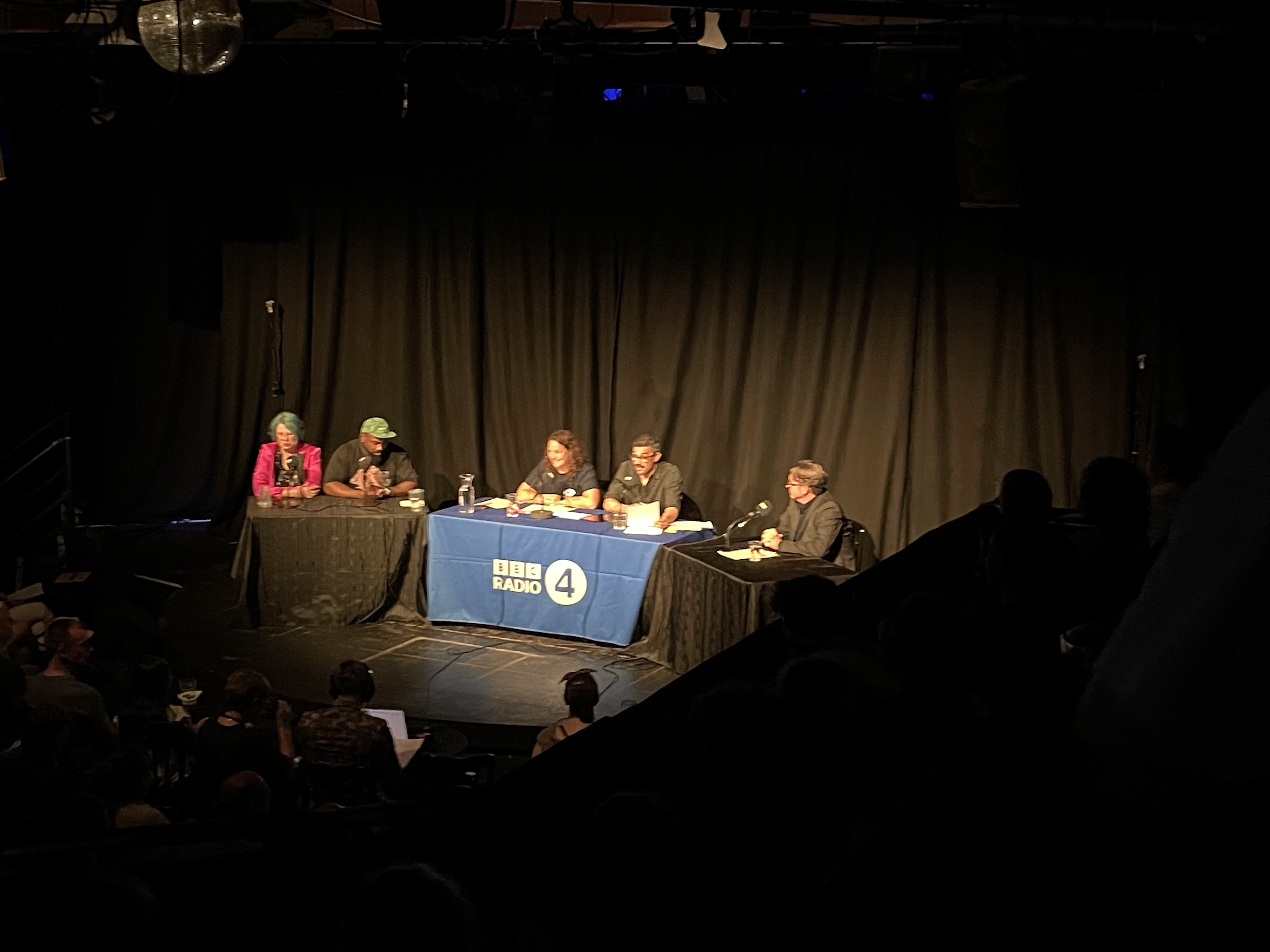
What It’s Actually Like to Be in the Audience for a BBC Radio Recording I’ve listened to The Infinite Monkey Cage for years, but always as a podcast. By the time it reaches me, it’s a beautifully edited 45-ish minutes of scientists and comedians talking about something interesting, complicated or occasionally completely ridiculous. What I’d never really thought about was what happens before somebody turns the original recording into that finished programme. So when I got the chance to go along and watch one being recorded, I was interested in the process almost as much as I was in the show itself. If you’ve never heard The Infinite Monkey Cage , the basic idea is simple. For most of its run it has been hosted by Professor Brian Cox and comedian Robin Ince. That’s Brian Cox the scientist, not Brian Cox the actor from Succession , Troy and myriad other things. The format pairs science with comedy, then adds another comedian and a couple of scientists to talk around a particular subject. Over the years that has meant everything from black holes and quantum physics to mushrooms, the human brain and whether wasps are actually better than bees. It works because it never really feels like somebody has bolted some jokes onto a science lecture. The comedians are genuinely interested in the subject, the scientists are normally pretty funny themselves, and everyone is allowed to wander off down interesting conversational rabbit holes before eventually finding their way back. The episode I went to see was about swearing, which was always going to appeal to me. As an East End boy, some of my favourite words in the English language are swear words of various kinds. When I was a youth worker, I even used to run a session called 21 Ways to Say Fuck . “Fuck.” “Fuck?” “Fuuuuuck…” They are not the same sentence. Despite the title, there was actually a useful point behind it: you can communicate an extraordinary range of meanings using exactly the same word, simply by changing your body language, facial expression and tone of voice. Anger, disbelief, admiration, fear, amusement, disappointment and affection can all apparently be squeezed into four letters. So I was probably the target audience for an evening spent discussing the science, psychology and social function of swearing. Getting into a recording is easier than you might think One of the useful things to know about British TV and radio is that a lot of programmes need audiences, and those audience places are often completely free. You’re not buying a conventional ticket to see a performance; you’re effectively becoming a small part of the recording process. I normally find them through SRO Audiences , which maintains listings of television and radio programmes currently looking for audiences. You can register for its mailing list and get emails when new recordings are added. SRO itself confirms that its tickets are free, although studio space is limited and it recommends applying early. There’s a real mixture on there. Sometimes you’ll see very well-known programmes and performers, alongside Radio 4 shows, comedy pilots, new formats and recordings involving people you may never have heard of. Inevitably, the really big names attract enormous demand. If Michael McIntyre or Graham Norton is recording something, you’re probably competing with a lot of other people for a place. Smaller comedy shows, radio programmes and new productions can be much easier to get into. The important thing to understand is that being given a ticket doesn’t necessarily guarantee you a seat. Productions know that when people haven’t paid for something, quite a few simply won’t turn up, so they usually issue more tickets than the venue can actually accommodate. That means you really do want to arrive early rather than strolling up two minutes before the advertised start time and assuming your name on an email guarantees you entry. For this recording, ticket validation started at 5.45pm and the programme itself began at 7pm, with no admission after that point. We turned up, queued, had our places validated and were safely in. I didn’t notice many people getting turned away that evening, but I’ve been to other recordings where arriving early has made a real difference. Sometimes the first people checked in get priority numbers, which can mean much better seats and, occasionally, the front row. The useful part is that once you’ve checked in, you don’t necessarily have to stand in a queue for the next hour. Depending on how that particular recording is organised, you can often validate your ticket, go and find something to eat or have a drink, then come back at the time you’ve been told. Just don’t get complacent about the return time. Once they start recording, they are not going to stop everything because you’re still trying to find somewhere to park. What happens once they start recording Our recording was at the Pleasance Theatre in north London, so it was a relatively intimate audience rather than some enormous television studio. Once everyone was seated there wasn’t much ceremony. Some productions use a warm-up act to explain what will happen, get people laughing and generally lift the energy in the room, but in this case the programme itself did most of that work. What surprised me was how closely the recording resembled the finished show. I’d half expected to see constant stops, production staff interrupting, people being told to repeat things and some obvious machinery behind the performance. Instead, most of it simply flowed. The panel clearly knew the broad territory they were covering, and there were obviously questions and subjects that needed to be reached, but there was plenty of freedom for the conversation to go wherever it naturally wanted. Someone would make a point, somebody else would challenge it, one of the comedians would spot something funny buried inside the explanation, and suddenly the whole panel would be riffing on that for a few minutes. Eventually they would find their way back to the science and move on. There was still production going on, of course. A producer sat at the front and would occasionally signal to the presenters that they needed to bring a particular person into the conversation, move things along or make sure a question was asked. But it was light-touch direction. You could see enough to understand that somebody was quietly making sure all the pieces required for the eventual programme were being captured, without disrupting the natural rhythm of the discussion. The biggest difference between being there and hearing the podcast was simply the amount of material. The finished programme I’m used to listening to lasts around 45 minutes. The recording went on for somewhere between an hour and a quarter and an hour and a half. That means a sizeable chunk of what happens in the room never reaches the radio. Some of it will be removed because the conversation wandered too far away from the subject. Some jokes will work better than others. Some answers will be fascinating but simply too long. There may be repetition, or a better version of the same point later in the recording. And, particularly during an episode about swearing, I suspect there are some bits that somebody at the BBC eventually decides are probably better left in the room. Watching it happen gave me a much greater appreciation of editing. The polished programme doesn’t feel heavily edited when you hear it; it just sounds like a very good conversation. But somewhere between the theatre and your headphones, somebody has taken perhaps 80 or 90 minutes of material and made a series of decisions about which 45 minutes tell the best version of that conversation. Being a good audience member mostly means not making unwanted noises There is a slightly odd contradiction involved in being part of a radio audience. They need you there because laughter and reactions give the programme energy, but at the same time you are surrounded by microphones whose job is to hear absolutely everything. Laughing at a joke is useful. Dropping a metal water bottle while one of the scientists is making the key point of the evening is not. Once the recording is underway, you’re therefore encouraged to stay in your seat and avoid unnecessary movement. A cough at the wrong time, somebody rummaging through a bag, a chair scraping across the floor or a bottle rolling down the aisle can all end up embedded in a piece of audio somebody would otherwise have wanted to use. This also leads to one of the less glamorous pieces of advice I can offer about attending a recording: think about your bladder. Going to the pub beforehand is fine. Going to the pub beforehand and having five pints becomes considerably less clever when you realise you may be expected to sit quietly for the next hour and a half while your body sends you increasingly urgent messages about the location of the nearest toilet. The bit you don’t hear: pickups When the main recording finishes, you still might not be finished. This is where pickups come in. Essentially, the production team has been keeping track of anything they may need to record again. Perhaps somebody stumbled over a line, there was a noise in the room, an introduction wasn’t quite clean enough, or a presenter fluffed a piece of wording that will be needed to stitch two sections together in the edit. A producer then works through the list and asks for those bits again. On a loose conversational programme that might only mean repeating a few sentences. With something more heavily scripted, it can apparently take another 15 or 20 minutes while presenters go back through several pieces of material and produce cleaner versions. This gets particularly strange with comedy because occasionally the thing they need another clean recording of is a joke. The first time around, the audience heard the setup, didn’t know what was coming and laughed naturally. Then the performer delivers it again. You already know the punchline, but perhaps you manage another decent laugh. By the third or fourth attempt, you’re sitting there trying to recreate the spontaneous amusement you felt several minutes ago while everybody in the room knows exactly what is about to be said. It turns out there’s a reason canned laughter sounds like canned laughter. Genuine laughter is surprisingly difficult to manufacture once your brain already knows where the joke is going. Once the pickups are done, though, that really is it. The panel disappears, the audience heads home and the production team is left with the much less glamorous job of turning everything they have recorded into the programme everyone else will eventually hear. It’s worth doing, even if you’re not obsessed with the show I’d absolutely go to another recording, partly because I already love The Infinite Monkey Cage , but also because seeing how something familiar is made gives you a different appreciation of it afterwards. When you next listen, you can almost hear the invisible work behind it. You know there was a producer sitting just out of sight keeping things moving. You know that a wonderfully neat transition may have been assembled from two parts of a much longer conversation. You know there were jokes and digressions that everyone in the room heard but you never will. And you know that the relaxed, effortless 45-minute conversation in your podcast feed started life as something considerably longer and messier. There’s also something appealing about the fact that you can experience all of this for free. You don’t have to be connected to the BBC or know somebody in production; you can simply keep an eye on the audience listings, apply for programmes you genuinely fancy seeing and see what you get. My suggestion would be to register with SRO, join the mailing list and keep a mental list of the programmes you’d happily make the effort for. Don’t dismiss the smaller shows either. The massive television recordings are obviously exciting if you can get into them, but sitting a few metres away from some very clever and funny people while they spend an evening talking bollocks about swearing is a pretty good way to spend a night too. Just remember to apply early, turn up early and go easy on the pre-show drinks. And if you manage to get tickets for Taskmaster or The Horne Section , there is one additional condition that I think should be written into SRO’s terms and conditions: you have to invite me. So an hour or so listening to scientists and comedians pulling apart the language, psychology and social function of swearing was never going to be a difficult sell. But the bit I found almost as interesting as the subject was seeing what happens around the programme that you never hear when the podcast lands in your feed. First, you have to get in One of the best-kept secrets about British television and radio is that you can go and watch loads of it being made for nothing. Programmes with studio audiences need actual human beings sitting in those seats. For many BBC comedy and entertainment recordings, you don’t buy a conventional ticket. You apply for a free audience place. I tend to use SRO Audiences . Their website lists television and radio programmes currently looking for audiences, and you can join the mailing list to be told when new recordings become available. SRO confirms that its tickets are free and that capacity is limited, so applying early helps. The range can be surprisingly good. At various times you’ll find big television shows alongside Radio 4 panel programmes, pilots, new comedy formats and recordings involving performers you’ve never heard of yet. Obviously, your chances vary enormously. Apply for something involving Graham Norton, Michael McIntyre or another huge television name and there may be an enormous number of people chasing the same seats. Go for a smaller Radio 4 programme, a new format or something slightly niche and your odds can be considerably better. And getting a ticket still doesn’t always mean you are getting through the door. Productions commonly issue more audience tickets than there are seats because, unsurprisingly, people are much less reliable when something is free. If everybody who has a ticket actually turns up, the people arriving last can lose out. So rule number one is simple: get there early . For The Infinite Monkey Cage , we were at the Pleasance Theatre in north London. Its Main House officially holds 217 people, so this was a pretty intimate recording rather than some enormous television studio. Ticket validation started at 5.45pm for a 7pm recording. You turn up, queue, get your place validated and then, depending on the production, you may be given a numbered or priority place in the eventual queue. I’ve been to other comedy and radio recordings where getting there early has effectively meant getting front-row seats. Once you’ve been checked in, you can often disappear again. Find a pub, grab something to eat, then come back at the time they tell you. Just don't cut it fine. Ours had a very clear no entry after 7pm rule. A recording can't hold everything up because somebody is still trying to park their car. Then it becomes a performance Once everyone was inside, there really wasn’t much ceremony. Some recordings have a warm-up comedian whose job is partly to get the audience relaxed and partly to make sure everybody understands how things work. Others largely get on with it. This one got on with it. And what surprised me was how little it felt like watching people manufacture a radio programme. It felt like watching a show. There were clearly things the panel knew they needed to cover. Questions had been prepared. The experts obviously knew the territory they were going to discuss. Some lines or sections had clearly been thought about beforehand. But within that structure they had enormous freedom. Someone would say something interesting, somebody else would pick at it, the comedian would spot something ridiculous in the explanation, that would send the conversation somewhere else, and eventually it would find its way back. At the front of the stage sat a producer, occasionally signalling to the presenters that they needed to bring somebody in or get to a particular question. It was enough steering to make sure the programme they needed was actually being recorded, but it wasn't somebody constantly shouting instructions or stopping everything. Most of the time, it just flowed. The version of The Infinite Monkey Cage I normally hear as a podcast is a tight, polished programme of roughly 45 minutes. What we watched lasted somewhere around an hour and a quarter to an hour and a half. And that extra time is where you suddenly appreciate how much of radio is created in the edit. There were diversions. There were jokes that went further than the eventual BBC version probably will. There were bits that were interesting but not interesting enough to survive when someone has to lose half an hour. Nothing felt wasted while you were watching it. But someone later has the job of deciding which version of the conversation the rest of us get to hear. Your job as an audience member is mostly not to ruin it There is one slightly strange thing about being in a radio audience. You are simultaneously there because they want to hear you and under strict instructions not to make any noise. Laughing is good. Applause is good when appropriate. Dropping a metal water bottle in the middle of a scientist explaining the key point they've been building towards for five minutes is less helpful. So once the recording starts, you are encouraged to stay put. If someone coughs, scrapes a chair, opens something noisily or decides they desperately need the toilet at exactly the wrong moment, that noise exists on the recording too. Which leads to another piece of practical advice: perhaps don't have five pints immediately beforehand. An hour and a half is quite a long time when your bladder has started its own increasingly urgent countdown. And then come the pickups The other thing you rarely think about when listening to radio is what happens after the apparent ending. The programme finishes. Everyone applauds. And then nobody goes anywhere, because now they need the pickups.